
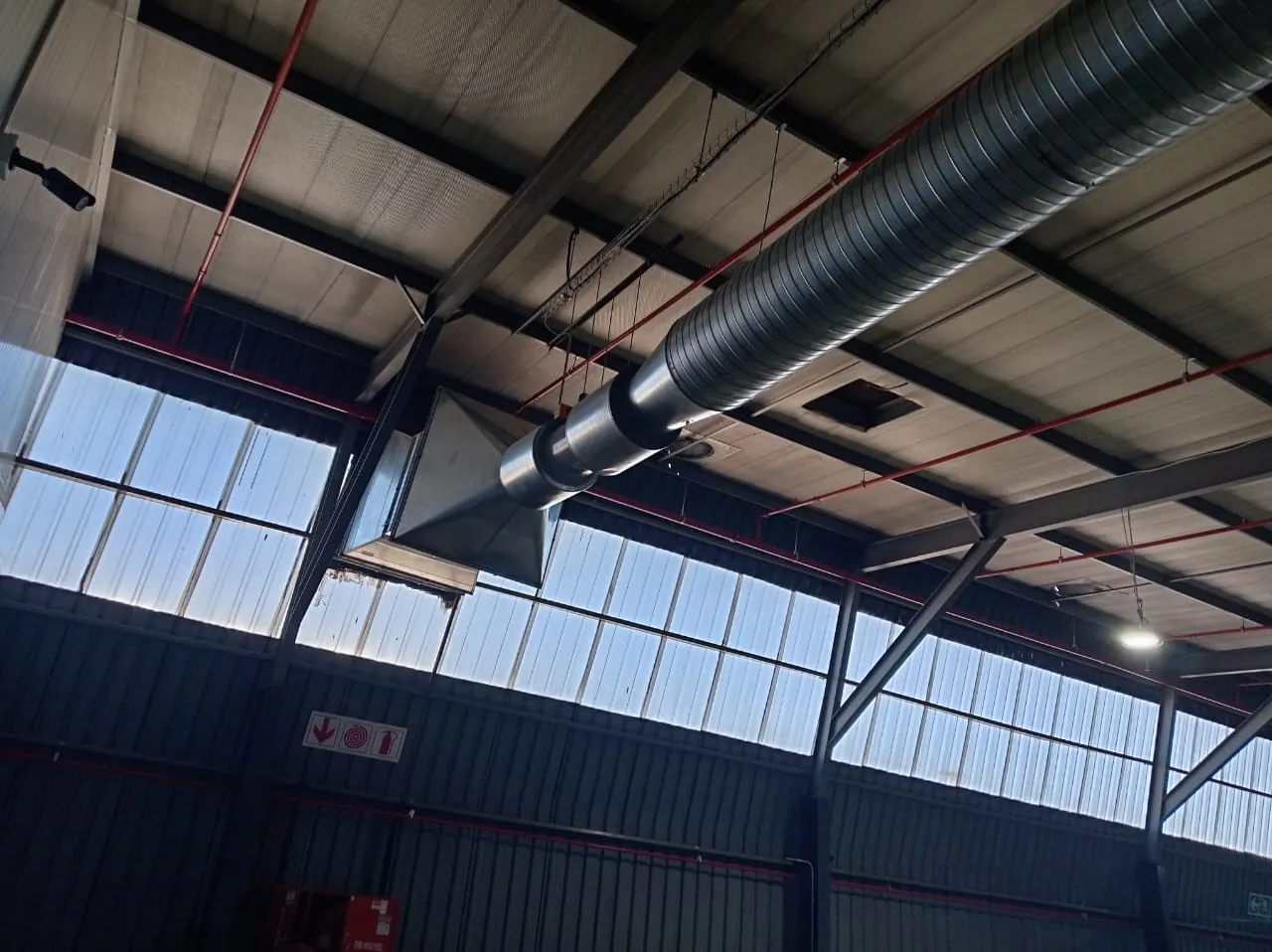
Busy dispensing and mixing rooms
Industrial bakeries can produce concentrated flour dust during bag tipping, silo discharges and mixer charging. General ventilation alone may not capture fine flour at the point of release. We examine the flow of ingredients, how operators load mixers and where dust accumulates after production shifts. Local capture must fit the ergonomics of the task and allow normal cleaning.
Integrating with existing lines
Bulk ingredient systems, existing filters and ducting should be reviewed before additional capture points are connected. Airflows and suction demands need checking so the new branch does not reduce capture elsewhere. Access to filter maintenance and food-production hygiene areas should be considered before placing equipment inside crowded plant rooms.
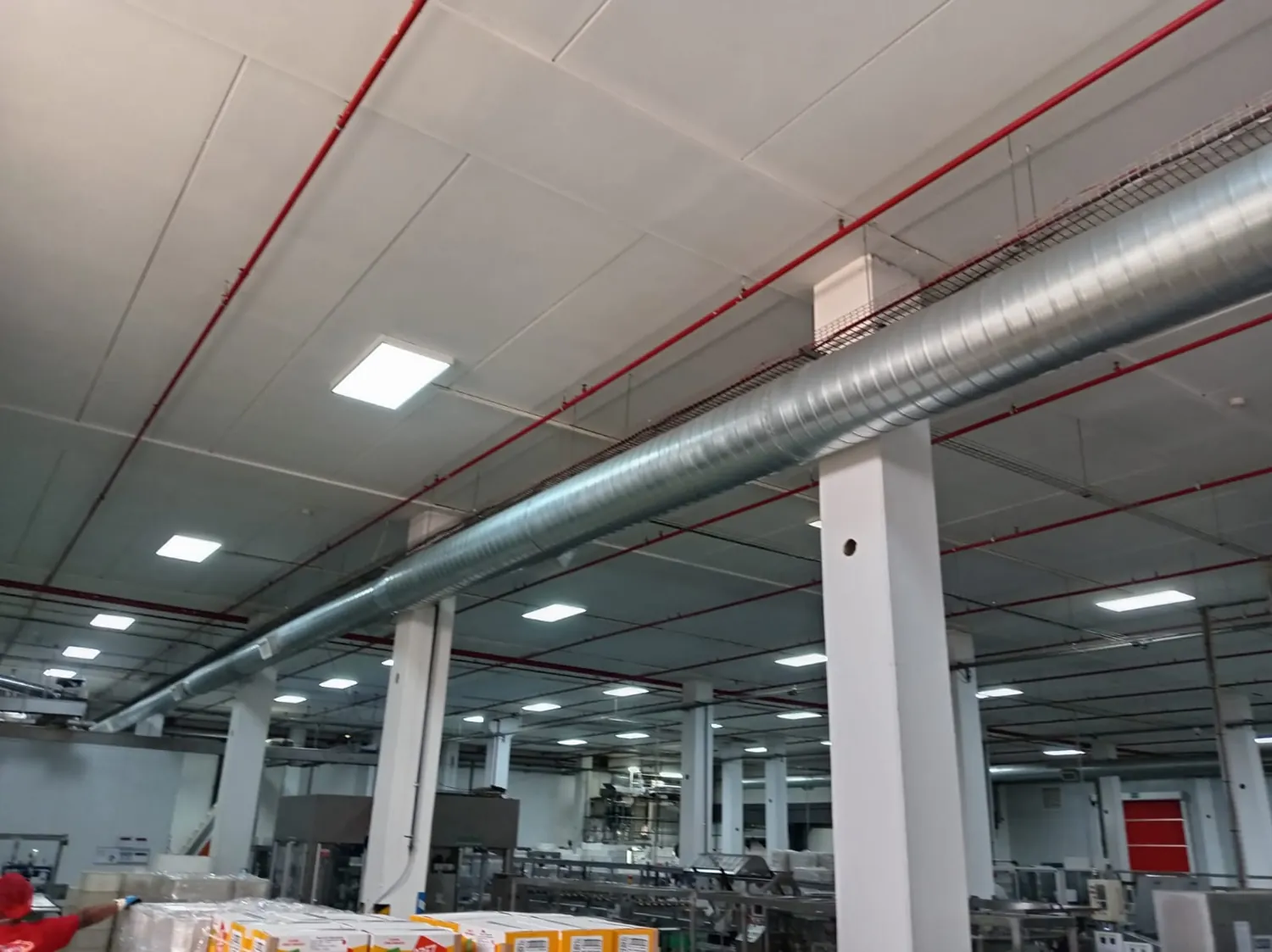
Explosion and contamination risks
Flour dust can present a serious combustible-dust hazard. An installation requires competent hazard assessment, appropriate equipment specification and relevant food safety controls. We treat dust collection as part of a wider safe handling system and avoid offering unsupported claims that a standard metal collector is intrinsically explosion-proof.
Request a site-based quotation
Equipment and operating considerations
Flour dust is generated at tipping, weighing, mixing and bulk transfer points; it is not evenly distributed through a bakery. Local pickup at charging stations can reduce the amount dispersed before general room ventilation has any effect. We examine how ingredients enter mixers, how filters are emptied and where deposits accumulate above work surfaces. Flour can form combustible dust clouds, so process-specific ignition and explosion risks require competent assessment before collector selection or modifications. Cleaning access and food-hygiene arrangements must be considered alongside extraction performance.
Speak to our industrial projects team
Request an industrial extraction assessment
Technical decisions that affect the result
Flour handling can release fine dust when sacks are tipped, ingredients are weighed and mixers are charged. Capture at these operations is preferable to allowing dust to settle across processing surfaces. We consider safe filter emptying, cleaning frequency and whether local enclosures could reduce the extraction volume needed.
Flour dust can form a combustible atmosphere under certain conditions, so competent explosion-risk assessment and applicable safeguards are essential. Bakery layouts must also support food hygiene and staff access during ingredient transfers. A quotation should describe the ingredient stations, batch sizes, existing ventilation and how collected material will be disposed of.
Operating requirements and practical checks
Bakery layouts often place weighing and mixing close to food packaging, so the route for captured dust and filter cleaning must avoid spreading residue into cleaner production zones. We would discuss where sacks are opened, whether ingredients are fed from silos and how staff empty waste containers. Electrical and explosion-protection requirements for combustible flour dust must be assessed competently. An extraction fan alone cannot establish that the handling process is safe.