
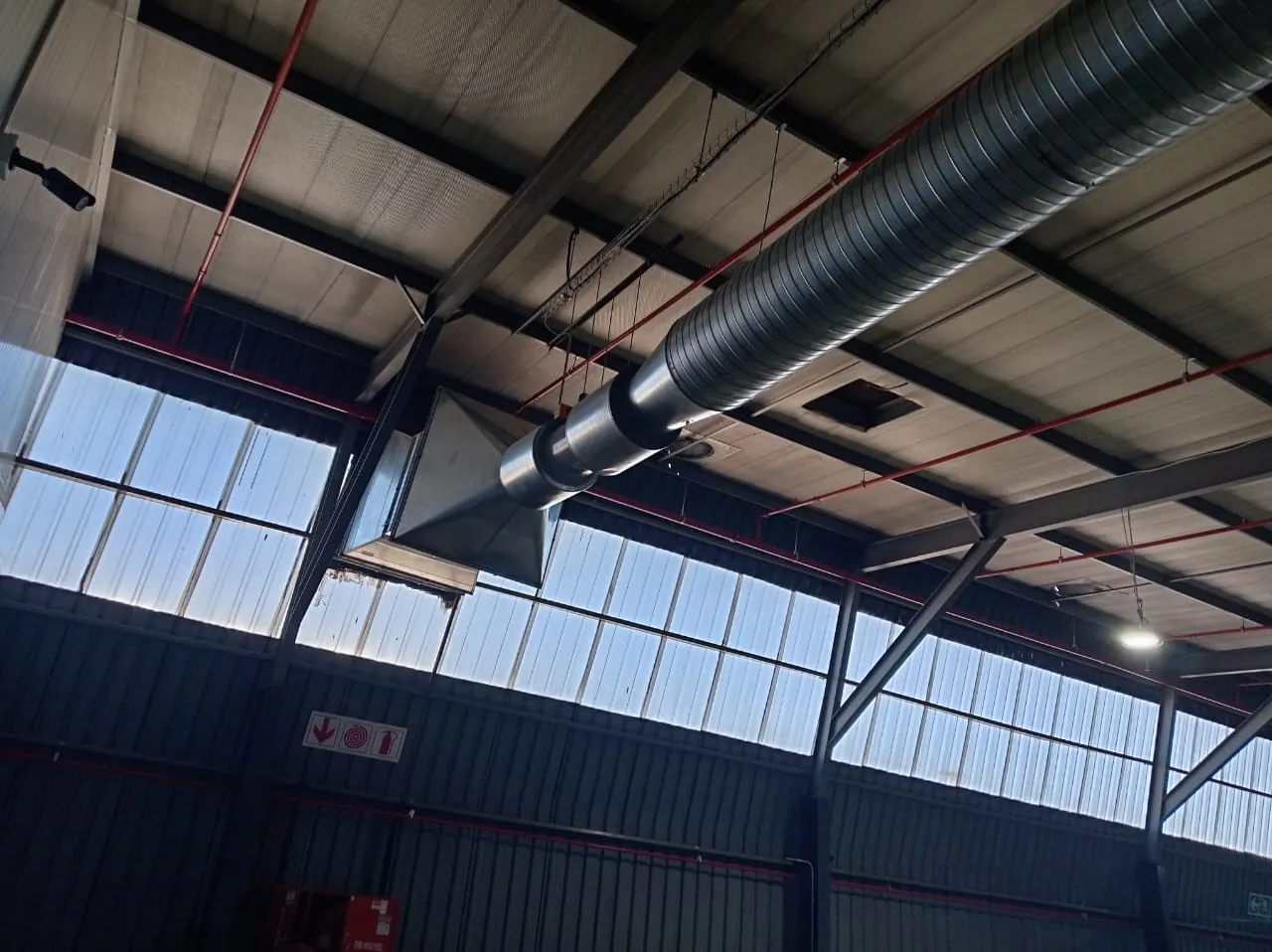
Control around transfer points
Bulk cement handling can release fine, persistent dust at conveyors, silos, bagging equipment and loading points. We discuss the location of escapes and how material moves through the plant before planning capture hoods or collector connections. Capture requirements at a silo vent are not identical to those at a bagging station or open conveyor transfer.
Filter loading and material build-up
Fine particulate can blind unsuitable filter media and accumulate in duct sections where conveying conditions are poor. Dust collector arrangement, access doors and safe hopper discharge should suit the duty and cleaning cycle. We examine whether an existing baghouse or cartridge system is losing performance through damaged seals, failed cleaning components or blocked dust discharge.
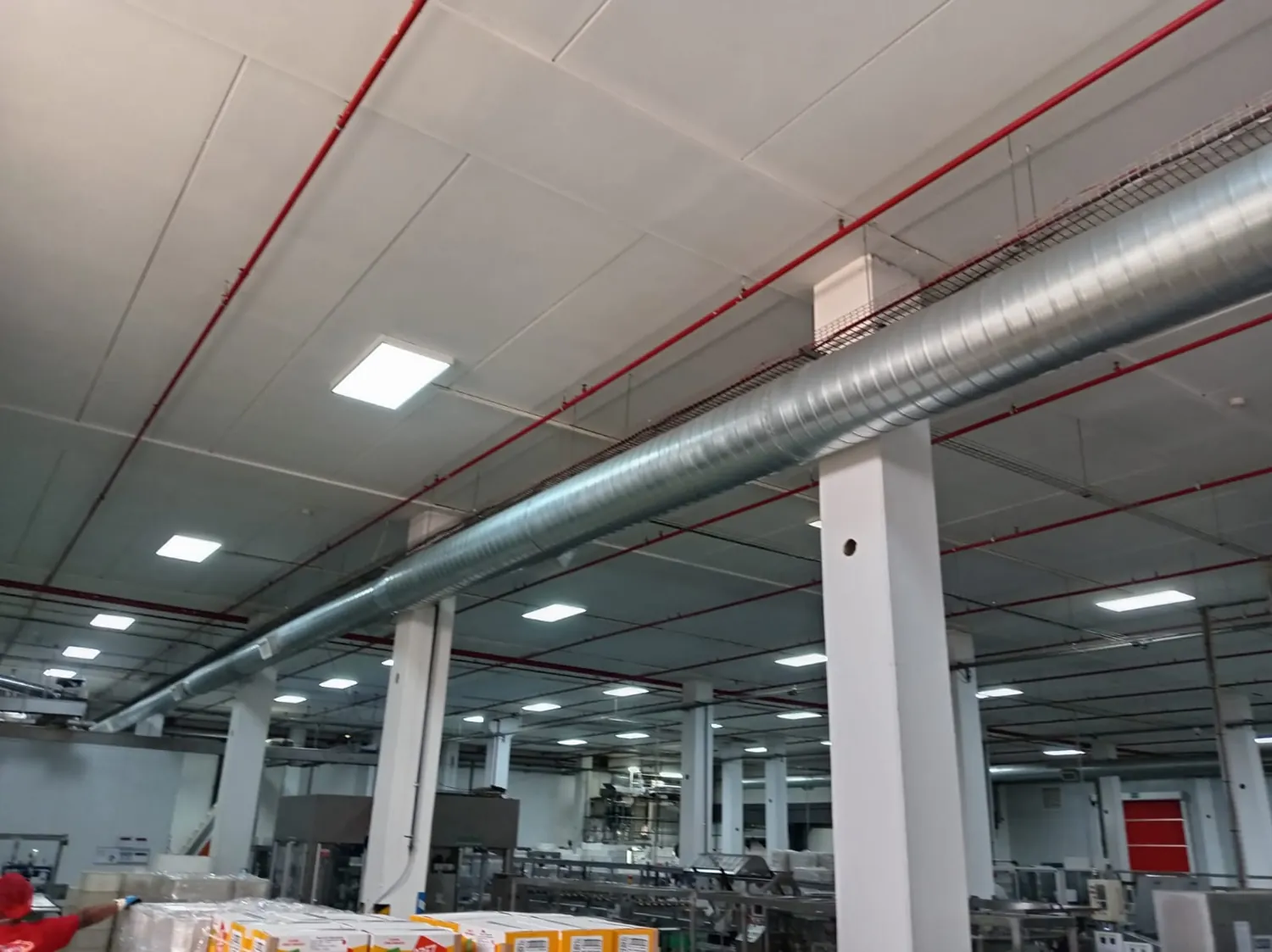
Maintenance planning
Dusty cement processing sites need service access and isolation arrangements that allow inspections without exposing workers unnecessarily. We discuss filter inspections, duct leaks and pressure measurements with the maintenance team. Exposure and emissions requirements must be verified against the actual facility and applicable regulations, not assumed from generic filter claims.
Request a site-based quotation
Equipment and operating considerations
Cement handling creates fine mineral particles that can abrade equipment and escape around transfer points. A collector near bag filling may have different airflow and cleaning demands from an extraction point above a conveyor discharge. We review dust release during start, stop and material transfer, then consider wear-resistant duct locations and practical hopper emptying. Filter selection must account for product fineness and moisture that can harden deposits. We can discuss collector fabrication and ductwork, with exposure verification and material-specific controls included in the project review.
Speak to our industrial projects team
Request an industrial extraction assessment
Technical decisions that affect the result
Cement dust is fine and can become a persistent maintenance burden around bagging lines, conveyors and silo transfer points. We consider where emissions escape and whether enclosing part of the process will reduce the collector load. Wear near inlet bends and hardened deposits where moisture enters can shorten equipment life.
When discussing a cement extraction upgrade, provide transfer rates, dust characteristics and current collector-pressure information. Discharge hoppers need enough access to prevent material backing into filtration zones. Appropriate exposure assessment and safe maintenance planning should be included rather than relying on a fan-speed increase as a universal solution.
Operating requirements and practical checks
A cement collector serving a bagging station may experience a different load profile from one capturing transfer dust above a conveyor. We would map the process step and observe whether the dust plume escapes during filling, sealing or equipment cleaning. Hopper discharge and filter media maintenance are particularly important where moisture can harden deposits. The agreed scope should define what constitutes restored capture during normal production rather than only at idle equipment.