
When your operation needs a properly scoped solution
Grinding, cutting, transferring and handling dry material can release fine particles well beyond the machine where they originate. A system that merely moves air around the production floor will not reliably capture dust at the source. We develop industrial extraction arrangements around the generating process, available access and practical separation of dusty air from occupied work areas.
What we review on site
Our initial review starts at each dust-producing point. We consider whether material escapes from an enclosure, whether operators need clear access, how many stations operate simultaneously and where duct runs can travel without disrupting lifting routes or other services. Collector type, filtration and fan duty depend on the actual dust and operating conditions; equipment cannot be responsibly chosen from floor area alone.
How we approach the work
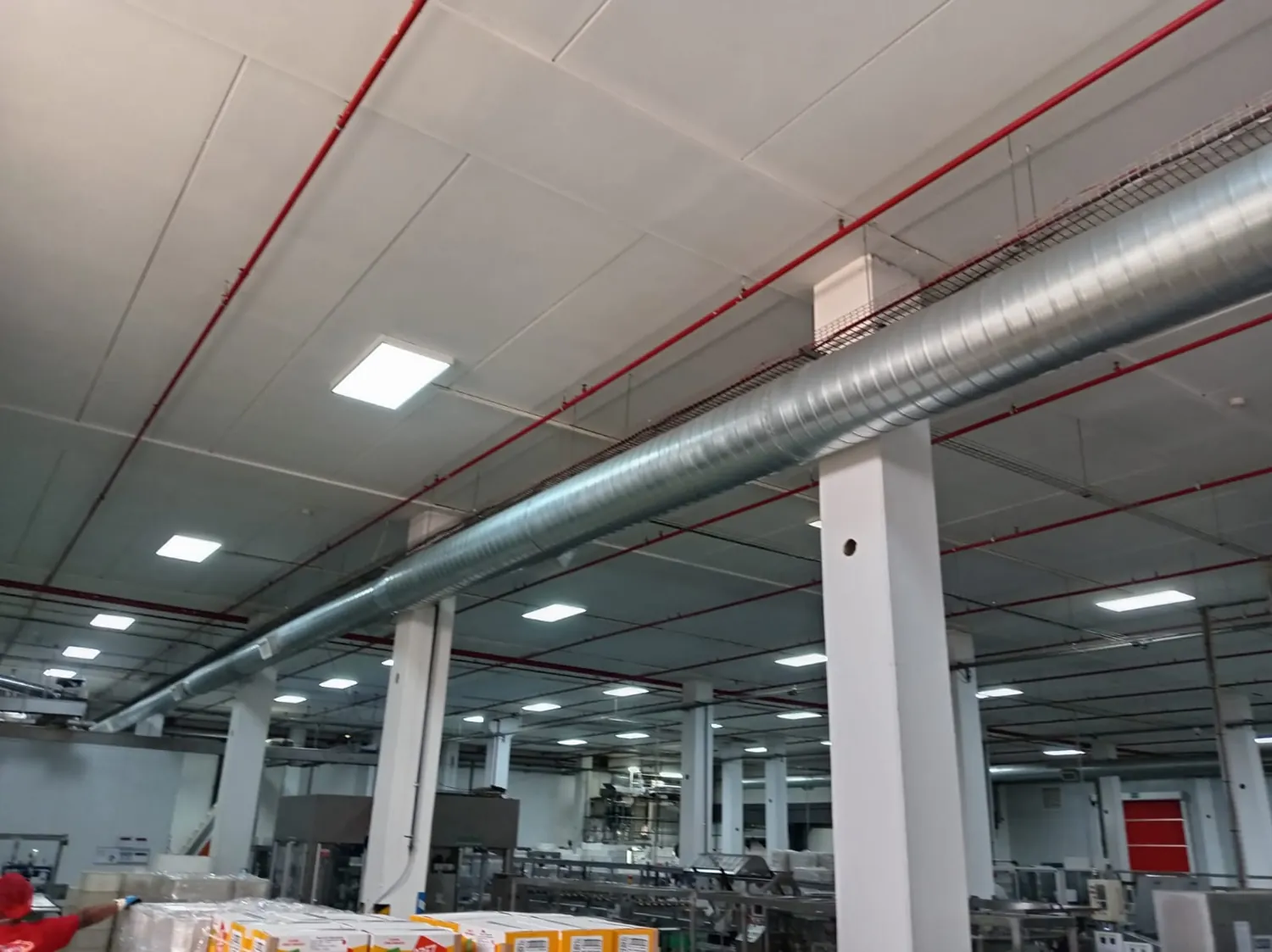
We can combine collection hoods, extraction ductwork, an appropriate fan and an in-house-manufactured dust collector into a complete project scope. Where an existing network is underperforming, we examine leaks, blocked branches, poor hood placement and changes in production before proposing replacement equipment. Our work can also be divided into installation and later maintenance phases to suit plant schedules.
Technical suitability and safe operation
Fine combustible powders, hot particles and potentially hazardous substances require additional precautions and specialist assessment. We ask about dust characteristics and the process rather than assuming one filter or housing arrangement suits every workshop. Access for inspecting filters and collecting waste is planned into the installation.
Information that helps us prepare your quotation
Give us the process description, material handled, number of pick-up points, available machine information, photos and site address. If production cannot stop during normal hours, tell us the access window so we can discuss a realistic approach.
Capture dust where it is produced
Industrial dust control starts at the process. A collector connected to poorly placed pickup hoods will not reliably control dust released at cutting, mixing, conveying or tipping points. We review how the operator works, where material escapes, and whether extraction can be brought closer to the source without interfering with production or machine guarding.
Sizing the system as a whole
Each branch adds demand to the network. Fan selection, duct cross-sections, bends, dampers, filter pressure losses and discharge arrangements must be considered together. Extending ductwork to additional machines without reassessing available capacity may leave the original and new pickup points underperforming. Our project discussions therefore cover both immediate demand and planned process changes.
How to brief our team
Share the process, operating hours, materials, machine layout and any existing fan or collector specifications. Photos of dust escape points and proposed duct routes are more useful than a generic description of a dusty building. For hazardous dust, provide relevant safety documentation so suitable specialist assessment can be included.
Capture at the machine
A hood that is inconvenient or obstructs machine loading is unlikely to be used correctly. We ask how material enters and leaves the equipment and where operators stand before discussing local capture and duct routing.
Equipment and operating considerations
Dust extraction must intercept airborne material at the process, convey it through suitable ducting and separate it without sending contamination back into the workplace. We discuss the emitting equipment, dust type, simultaneous pickup demand and collector maintenance access as connected decisions. A fan selected without considering filters and duct resistance may not deliver sufficient capture. Fabrication, installation or repairs are scoped around the real process and its hazards, with combustible or toxic substances requiring specialist assessment.