
When your operation needs a properly scoped solution
Centrifugal fans are often selected for systems that must overcome appreciable duct and filtration resistance. Their suitability depends on duty, impeller design and the operating conditions of the air being moved. We support centrifugal extraction projects with installation planning, fault assessment and repair or replacement discussions.
What we review on site
For a new installation we consider the requested airflow, likely system resistance, dust or fume properties, mounting position and access to the casing. Existing units are reviewed for abnormal vibration, accumulation on the impeller, deteriorating bearings, drive problems where applicable and changes in duct resistance. The visible fan model does not reveal the complete duty of the installation.
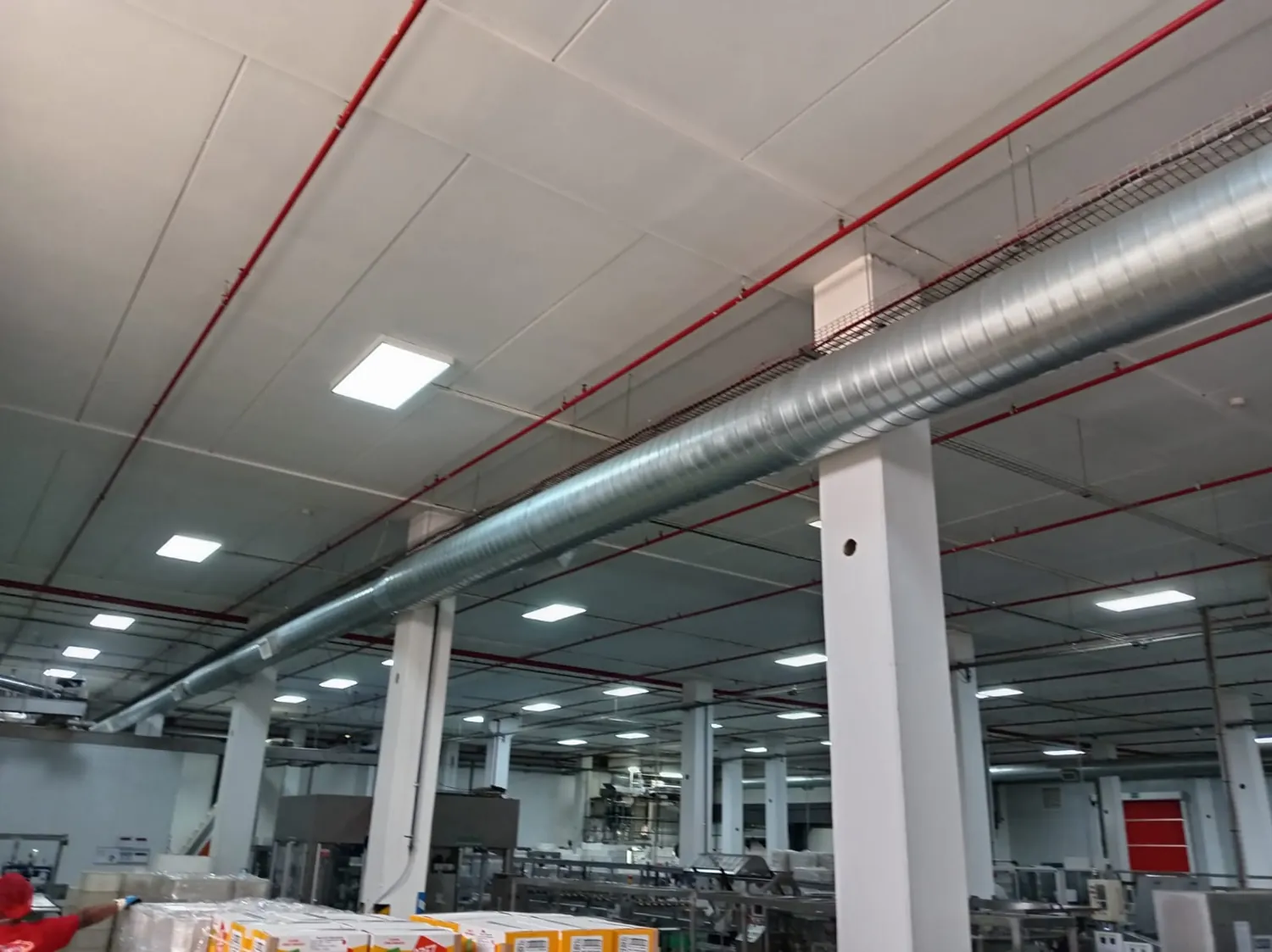
How we approach the work
We can address accessible mechanical faults, duct connection issues and fan replacement requirements based on an agreed inspection and specification. Where a fan supports a collector, the fan and filtration performance should be reviewed together. We ask about operating hours and planned production shutdowns before scheduling work.
Technical suitability and safe operation
High-temperature and potentially explosive airstreams require fans designed for those environments and the relevant safety precautions. We avoid substituting an ordinary centrifugal fan solely because its outlet appears to fit the duct.
Information that helps us prepare your quotation
Send the nameplate, impeller or casing photos, duct sizes, fault description and details of what the system extracts. Existing drawings or fan performance information are valuable when assessing replacement.
System resistance matters
A fan replacement must account for the connected network. The performance needed at the real operating point cannot be established solely from motor power or impeller diameter.
Equipment and operating considerations
Centrifugal fans must be selected against the resistance of the complete system, not only the visible duct diameter. A fan that was satisfactory before extra branches or filters were installed may now operate away from its intended point. We check impeller condition, casing clearance, vibration, bearings and potential restriction on the suction side. Material-laden air may require a different wheel construction from clean ventilation air. For an engineering quote, fan identification and operating conditions matter more than a photograph of the motor alone.
Planning the project with your operations team
Matching fan construction to the extracted air
Backward-curved, radial and other centrifugal impeller arrangements behave differently when particulate reaches the wheel. We establish whether the stream contains abrasive dust, grease, moisture or clean air before discussing impeller construction and housing access. For systems with filters, a change in pressure drop can shift the fan operating point; a seemingly healthy motor may still deliver insufficient capture at the machines.
A replacement that fits is not necessarily a replacement that works
Where an older fan has no usable duty records, we ask for duct layout, process details and available measurements rather than purchasing against casing dimensions alone. We also consider flexible connections, vibration isolation, support frames and whether the discharge direction introduces unnecessary elbows. The quotation can then distinguish fan supply, installation and any testing required after recommissioning.