
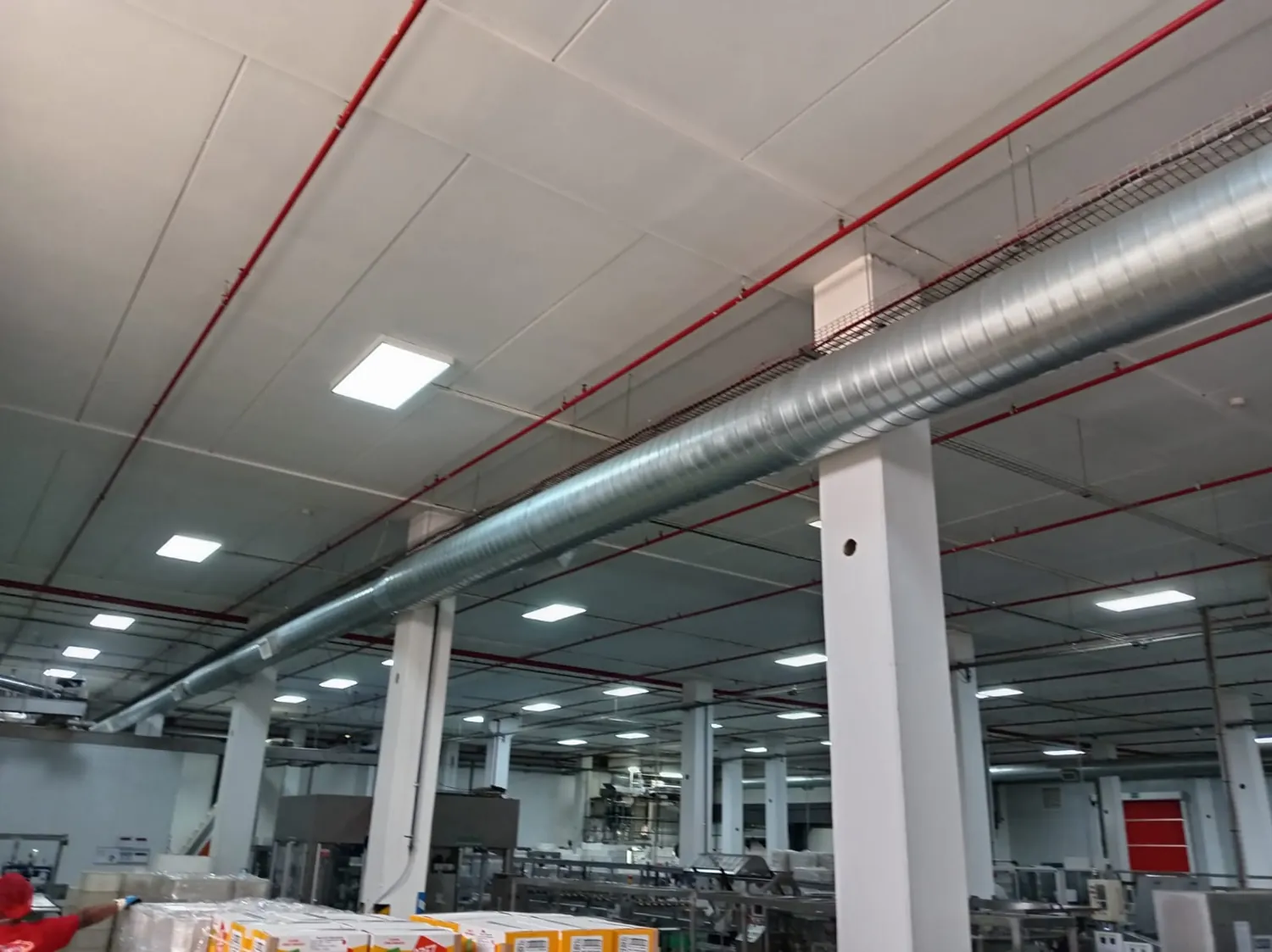
The project requirement
Leaking industrial extraction ductwork can reduce capture where it matters and distribute dust through ceiling voids or inaccessible plant spaces. We trace suspected leakage through the route rather than simply sealing visible joints.
Common trouble points include flexible connections, badly fitted transitions, access covers, damaged elbows and branches added to an older system. Ducts subjected to abrasive particles may wear thin at directional changes, while vibration can loosen poorly supported joints.
Assessment and technical decisions
The assessment considers the operating pressure, duct material, conveyed product and accessibility of the suspected area. Depending on the work, inspection may reveal loose supports, inadequate access doors or a wider design problem rather than a single leaking joint.
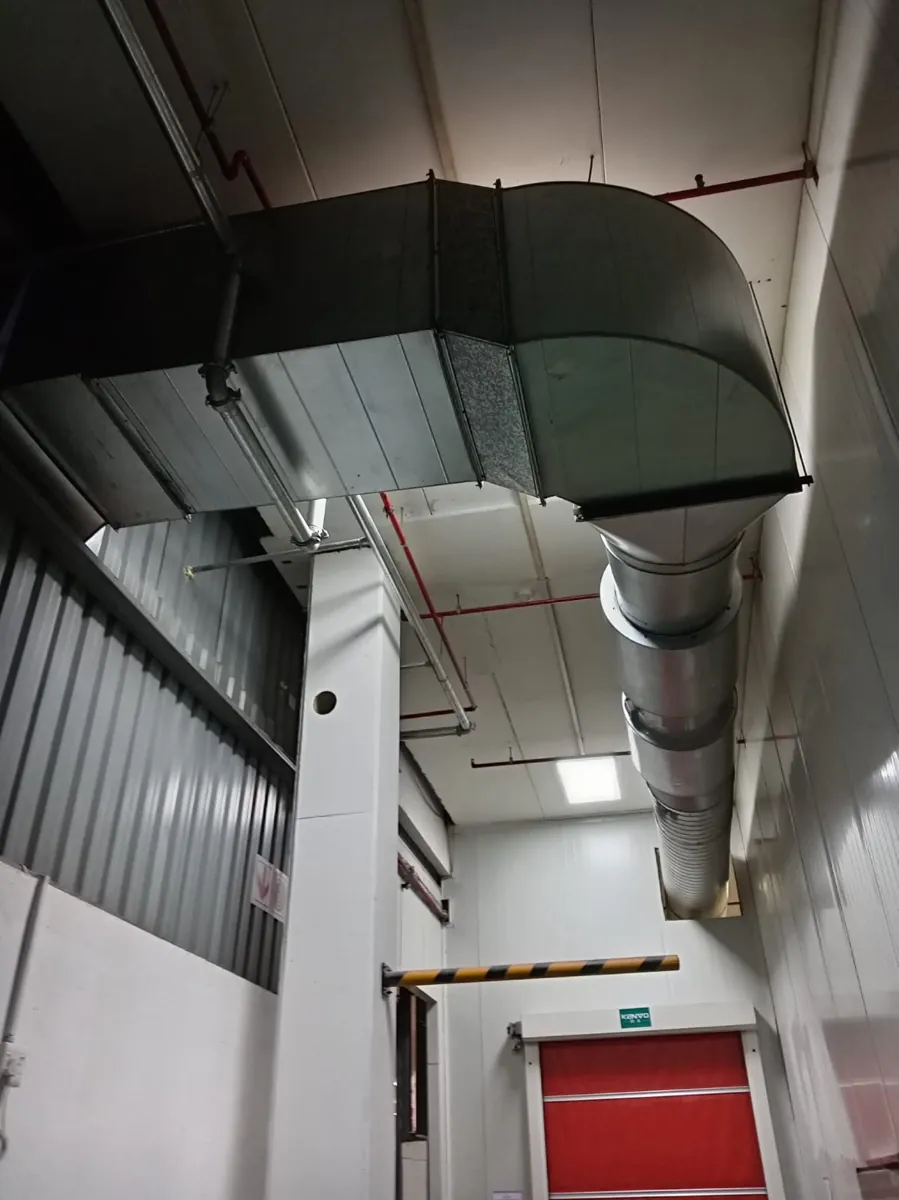
Manufacturing, repair and installation considerations
A repair scope can include section replacement, joint correction, fabrication of transitions and revised access points. If a fan has been operating at the wrong duty, the effect on other branches must be considered before changes are finalized.
Safety and system suitability
For hazardous dust or contaminated fumes, isolation, cleaning and exposure controls must be planned before opening ductwork. Visual repair alone is not evidence of regulatory or emissions compliance.
Information needed for a quotation
Provide photos of deposits near the duct, any known leak locations, the process material, duct diameters where available and whether the system runs continuously. A plan showing overhead access or production obstructions helps define the site work.
Long-term performance and handover
Effective maintenance includes planned inspection at wear locations and accessible joints. A consistent register of recurrent leaks can indicate which sections need redesign instead of repeated patching.
Where duct leakage creates operational problems
A duct system with gaps, failed joints or damaged access panels can lose extraction performance and discharge dust into unintended areas. In negative-pressure sections, unwanted air entering the duct can alter system resistance and reduce pickup at the process. In positive-pressure sections, leaks may release contaminated air back into the workplace.
Inspection should focus on joints, flexible connectors, inspection doors, branch transitions, supports and points where vibration or corrosion is apparent. Test procedures and acceptance criteria must be selected to suit the duct system and project specification, not assumed from an unrelated installation.
Send the duct arrangement, approximate height, accessible sections and the signs of leakage or poor capture. This allows the initial scope to distinguish repairs, access provisions and any required verification measurements.
Related services
Explore Industrial Ducting Repairs →
Equipment and operating considerations
Duct leakage can reduce capture at distant branches and allow contaminants into occupied areas. We look for loose flanges, damaged flexible connections, worn elbows and poorly sealed access doors. A test plan should identify the sections being assessed and the operating condition under which readings are taken. Repair decisions depend on whether the duct carries clean ventilation air, grease, abrasive dust or hazardous fumes. The handover should state the defects found and what was rechecked after sealing or replacing sections.