
When your operation needs a properly scoped solution
Leaking joints, crushed sections and disconnected branches can undermine otherwise serviceable extraction equipment. In some plants, a small duct failure causes material to build up near a machine while other branches continue to operate. We assess damaged industrial ductwork with the surrounding extraction system in mind.
What we review on site
We look for physical damage, separated connections, corrosion or wear, inaccessible blockages and signs that dust is escaping near joints. It is useful to know whether the affected section carries dust, fumes or ordinary ventilation air, as this changes the repair method and precautions. We also ask whether the duct has been altered since the system was commissioned.
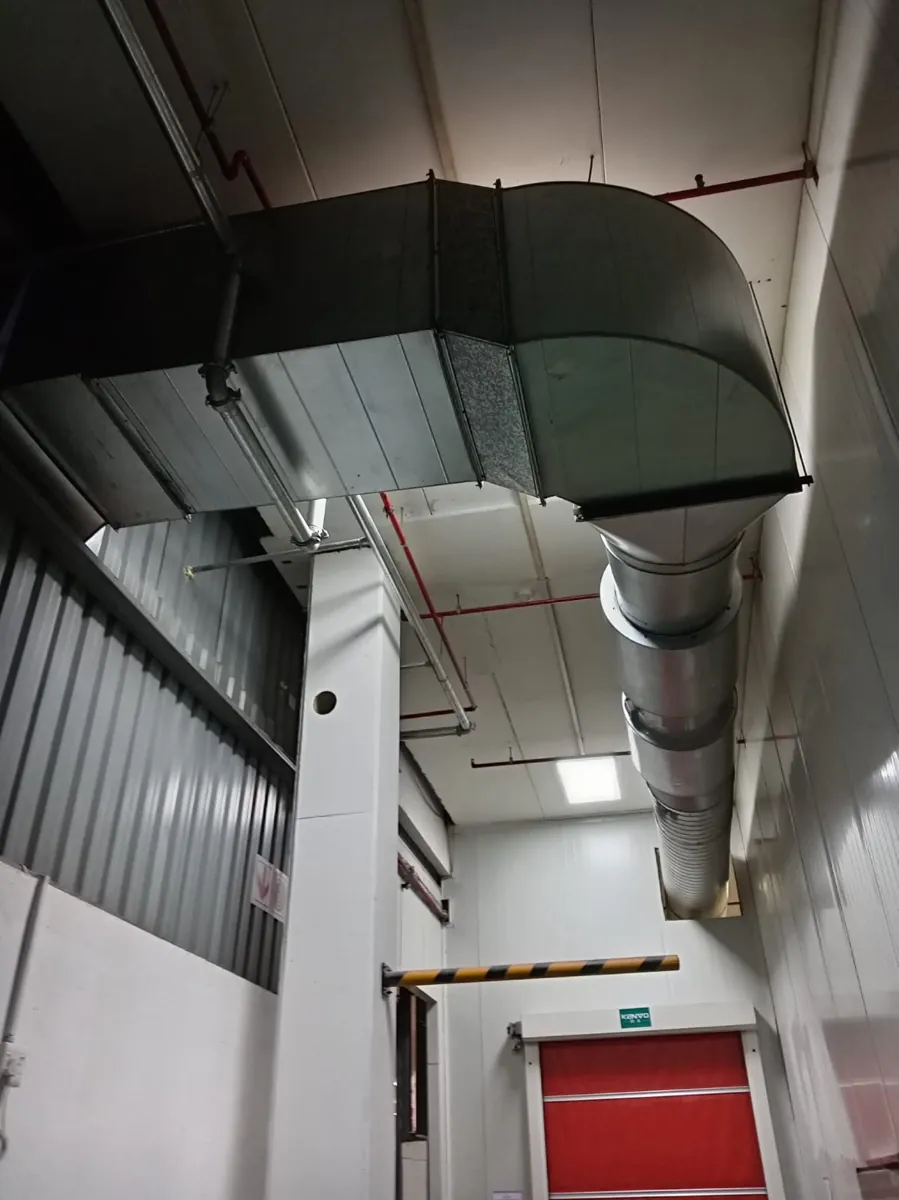
How we approach the work
Repair work may involve replacing damaged sections, restoring connections, correcting supports or reworking local branches. If the root cause is inappropriate duct design or repeated impact from site operations, we raise that rather than offering the same repair indefinitely. We can also discuss a phased replacement when disruption must be limited.
Technical suitability and safe operation
Overhead duct repair requires suitable access and isolation. A duct carrying hazardous substances should not be opened or cleaned as routine ventilation work without understanding the contents and site risk controls.
Information that helps us prepare your quotation
Send photographs showing both the damaged area and the wider duct route, approximate heights, the extracted material and any current impact on production. This helps us assess equipment access and work scope.
Repeat failures deserve investigation
A duct section that wears through in the same position may be experiencing abrasion or repeated mechanical impact. Replacement should consider why the failure recurs.
Fault patterns and repair decisions
A duct can look intact externally while leaking at flanges, access doors or eroded bends. We ask where the loss of capture was first noticed and whether abrasive particles or moisture are present. Temporary patches may restore containment briefly but should not obstruct the duct or create another accumulation point. Repair selection depends on sheet thickness, connection type, support condition and safe access. Where the duct carries hazardous material, the containment and isolation method requires a specific safety plan.
Planning the project with your operations team
Start with your site and equipment details
Repair assessment and acceptance checks
A duct repair should address why the section failed: abrasion at an elbow, flexing near a fan, impact from nearby equipment or leaking joints caused by poor support. We look for similar damage elsewhere before quoting a local replacement. Accessible inspection doors and removable sections may reduce future downtime. Where an altered route affects the system's pressure loss, the fan and branch distribution should also be reviewed before repair work is accepted as complete.