Remove exhaust where engines run
Vehicle workshops can experience localized diesel or petrol exhaust during diagnostics, vehicle movement and engine testing. We examine which bays run engines, the duration of those activities and where exhaust gases can be captured near the tailpipe. Ordinary comfort cooling does not replace targeted exhaust removal in an enclosed service space.
Hose and rail arrangements
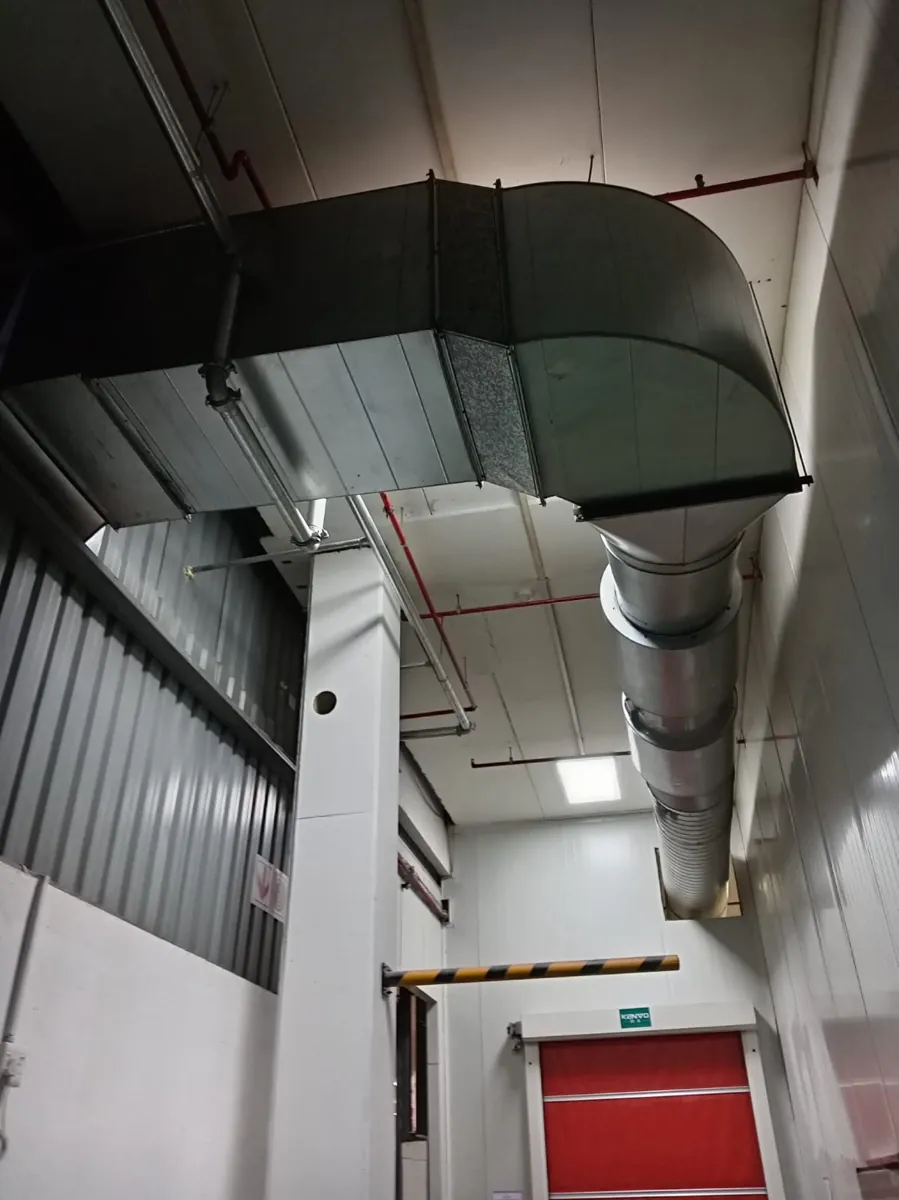
Tailpipe extraction hoses, reels and overhead rail systems may suit different workshop configurations. Vehicle lift positions, hose reach, ceiling height and moving traffic routes influence usability. We discuss duct routing, fan placement and exhaust discharge so mechanics can connect the extraction without impeding daily workshop activity.
Safe operating requirements
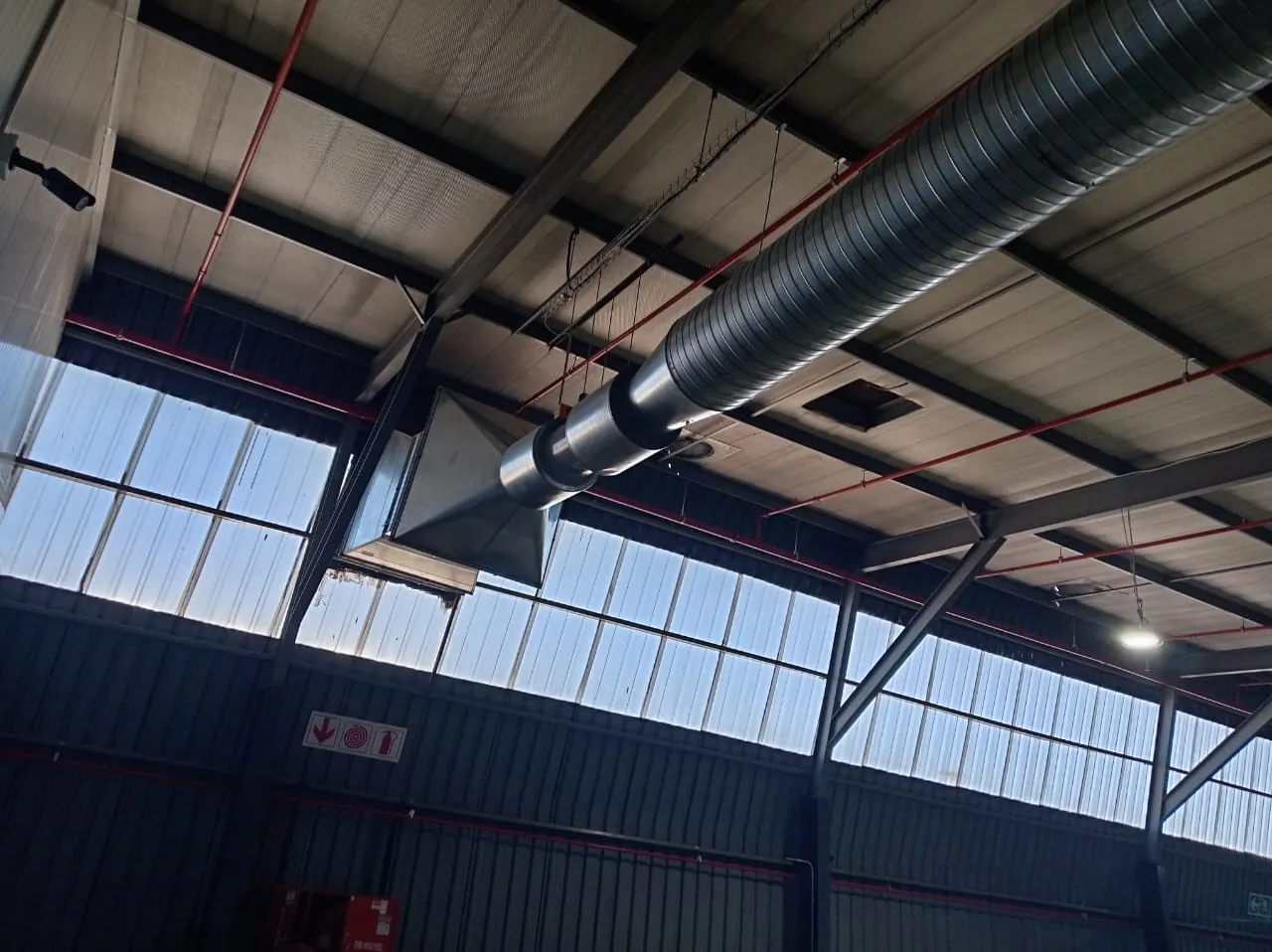
Exhaust contains hazardous gases and particulates that require suitable capture and safe outdoor discharge. Engine types, temperature conditions and manufacturer requirements influence hose and system specification. Personnel exposure risk and any necessary workplace assessments should guide the final design and operating procedures.
Request a site-based quotation
Equipment and operating considerations
Vehicle exhaust capture must follow the vehicle, not just ventilate the building after fumes disperse. Tailpipe extraction, hose positioning and discharge away from air intakes are important where vehicles idle indoors. Welding bays and solvent use create different contaminants, so we avoid treating one general exhaust fan as a complete solution. We can assess how vehicles move between lifts, what engine types are serviced and whether technicians need multiple pickups operating together. Hose reels, fan controls and connection wear also affect practical use throughout a busy workshop day.
Speak to our industrial projects team
Request an industrial extraction assessment
Technical decisions that affect the result
Workshop exhaust systems are intended to capture harmful engine emissions while vehicles are being serviced or tested indoors. We review whether extraction hoses can reach the tailpipe at the vehicle lifts or test bays without creating trip hazards or interfering with technicians. An extraction arrangement for idling cars may not be appropriate for heavy-duty or high-temperature exhaust duty.
Provide the number of working bays, engine types, usual running periods and preferred hose storage locations. Extraction outlets should discharge safely without feeding contaminated air towards fresh-air inlets. A general wall-mounted ventilation fan does not replace effective tailpipe capture; the final design and personnel exposure assessment must be appropriate to the work carried out.
Operating requirements and practical checks
Before designing extraction across multiple service bays, we would confirm which vehicles actually run indoors and whether technicians need mobile or fixed capture points. Hose routing should not interfere with lifts, wheel alignment equipment or workshop traffic. The system must also provide a safe discharge route and clear operating instructions so extraction is connected during engine testing. Any exposure monitoring or regulatory controls remain subject to suitable specialist assessment.