
Heavy sawdust flows
Sawmill cutting operations can generate large quantities of coarse sawdust as well as suspended fines. Transporting this material through ducting presents different design considerations from extracting fumes or ordinary building dust. We review machinery feed rates, collection points and whether the plant requires a continuous waste-conveying arrangement or localized machine extraction.
Durable system layout
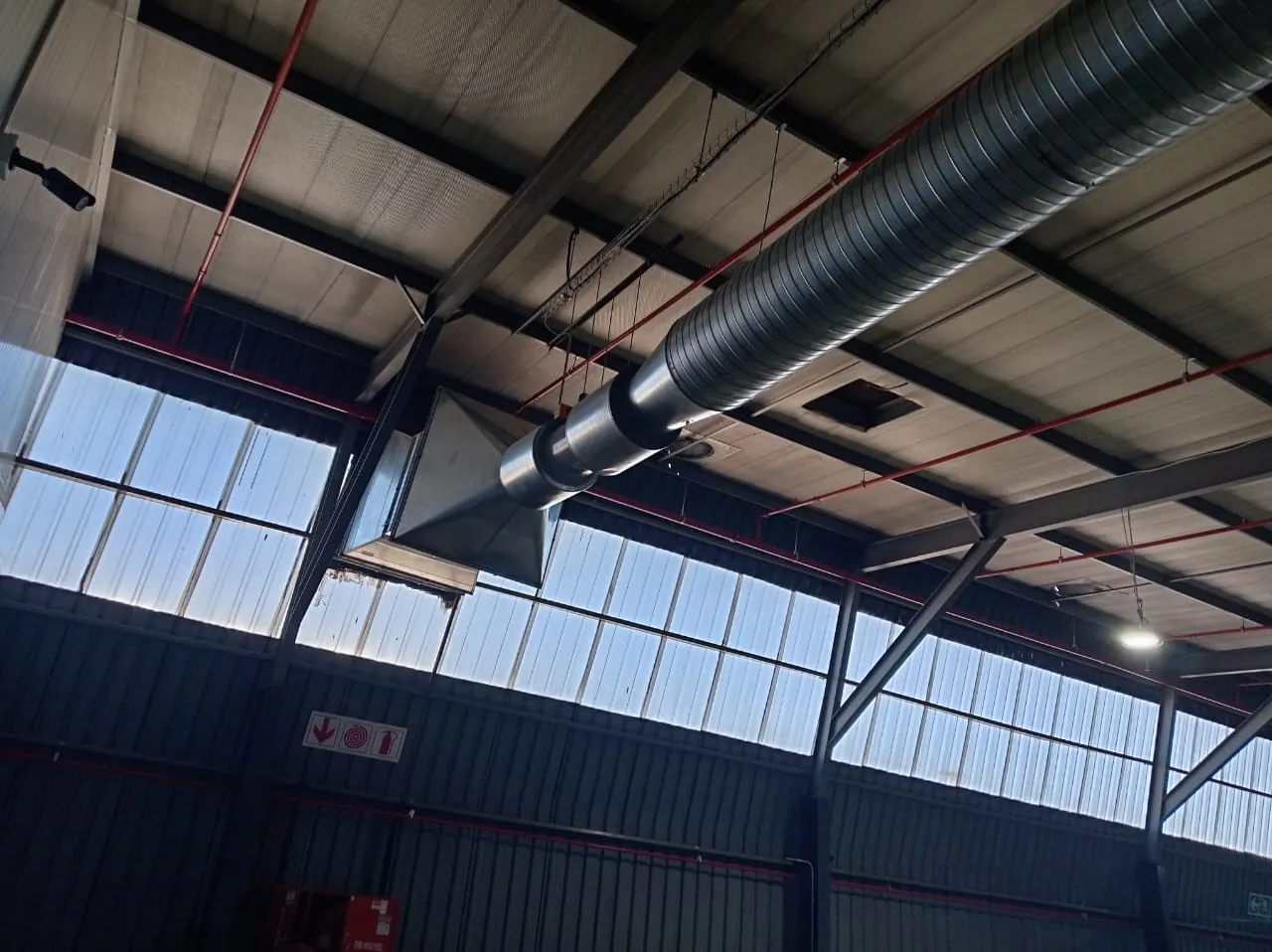
Outdoor runs, long distances between production and waste discharge, vibration and abrasive wood particles influence system construction. Duct access points should allow blockage inspections; bends and transitions should avoid unnecessary material accumulation. The positioning of fan equipment and the discharge arrangement must be assessed alongside noise, maintenance and safe access.
Separation and material discharge
Cyclone separation, downstream filtration, hoppers and the chosen discharge method need to be compatible with waste volume and expected particle sizes. Fire and combustible-dust hazards must be assessed for the specific operation. We avoid selecting a collector from duct diameter alone without understanding production throughput and simultaneous machine demand.
Request a site-based quotation
Equipment and operating considerations
Sawmills generate a mixture of coarse chips, sawdust and finer airborne particles. We consider which streams should be transported together and whether branches must accommodate multiple machines running simultaneously. Wear at bends, chip settling and collector discharge can affect reliability. Wood dust may be combustible, so equipment and hazard controls require project-specific assessment. We ask for saw types, line layout, material moisture and the current method of handling collected waste before suggesting a system.
Speak to our industrial projects team
Request an industrial extraction assessment
Technical decisions that affect the result
A sawmill can release chips, sawdust and fine particles at saw blades, planers, conveyors and transfer points. Coarse chips may settle if the transport route is too restrictive or poorly arranged, while fine dust can escape at machine enclosures. We consider which machines operate simultaneously and whether collection must adapt to varied timber dimensions.
A mill enquiry should provide the cutting and handling equipment list, current pickup positions and a description of where residue is discharged. Wood dust can be combustible, so qualified hazard assessment is essential for system design and any modifications. Collector and duct maintenance must also be possible without exposing personnel to stored residues or obstructing moving timber.
Operating requirements and practical checks
Chip and dust collection should be assessed during the mill's busiest cutting sequence, since several simultaneous machines can alter pickup at individual outlets. Deposits at the first duct bend or a frequently blocked bin can point to a layout problem rather than an isolated filter fault. The project plan should include safe inspection and disposal arrangements, particularly where timber offcuts move on conveyors near duct supports. Specialist combustible-dust controls must be defined for the installation.