
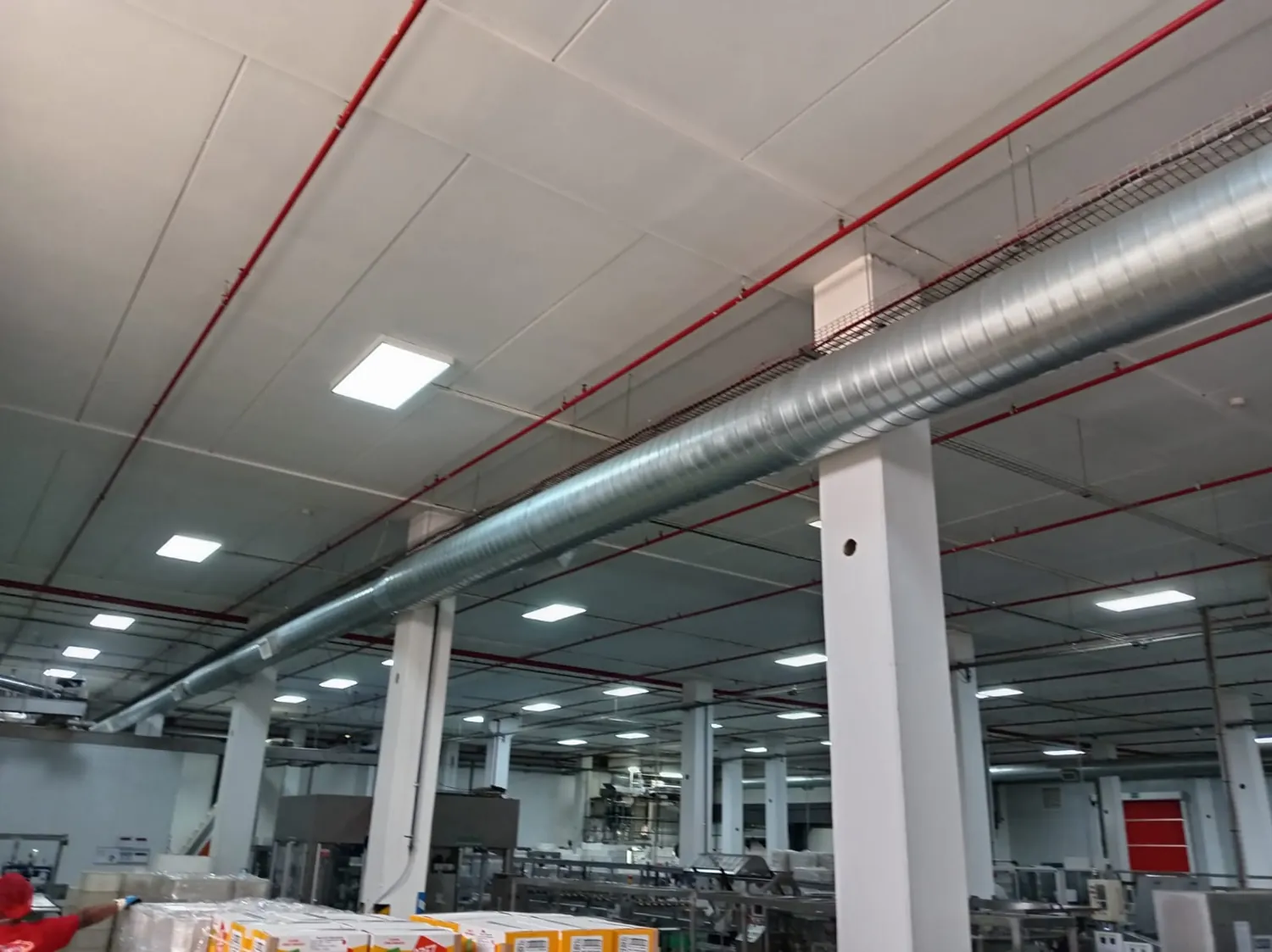
The project requirement
An ageing baghouse may lose capacity long before the structure is beyond repair. Our team assesses whether the filtration system, duct network, pulse-cleaning arrangement or extraction fan is responsible before recommending a retrofit.
Operators often report rising differential pressure, frequent bag changes or dust returning to working areas. These symptoms have different causes: damaged bags allow bypass, blocked media raises resistance, and a faulty pulse circuit prevents effective cleaning. Replacing every part without identifying the cause can leave the same fault in place.
Assessment and technical decisions
We inspect access conditions, hopper discharge, seals, fan behaviour and the way the baghouse responds during normal production. Where instruments are available, operating pressures and maintenance records help distinguish a filtration problem from duct restrictions or process changes.
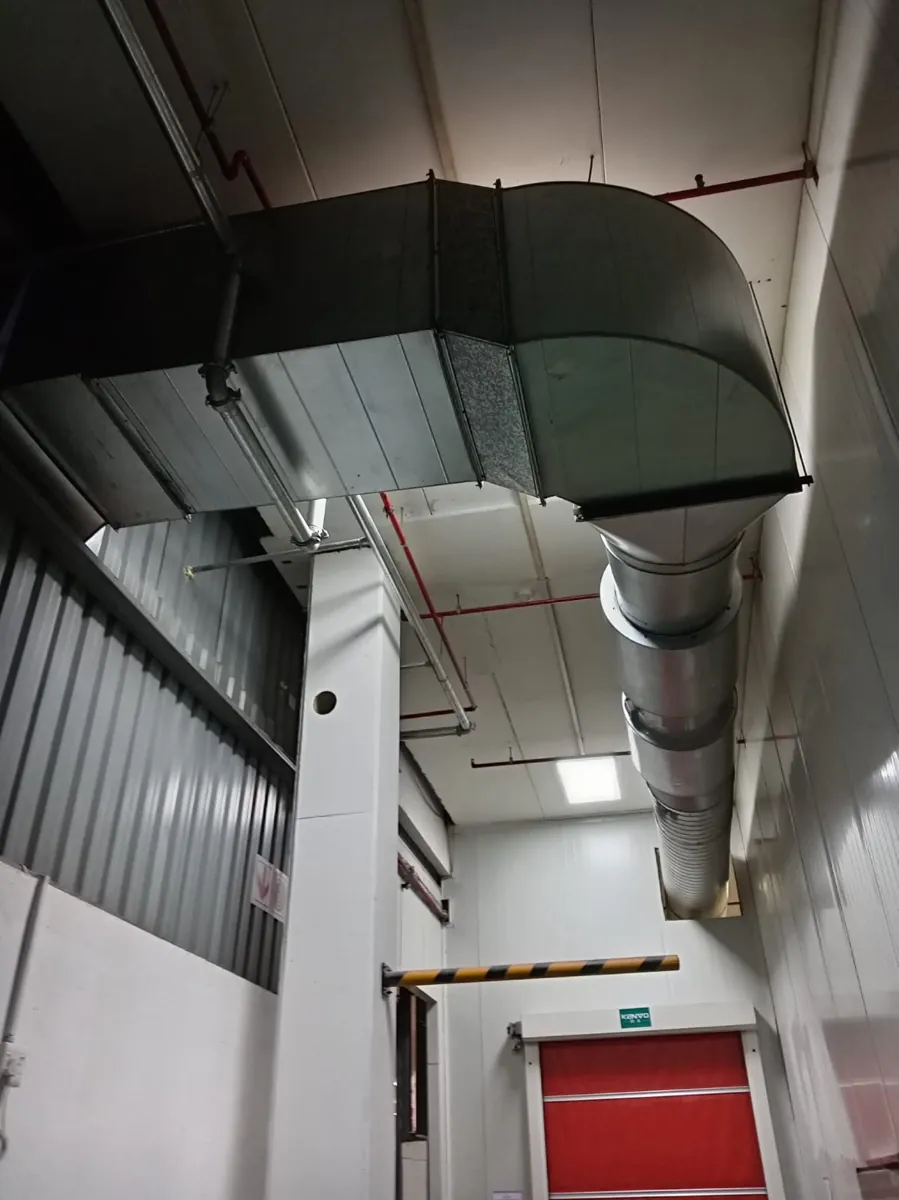
Manufacturing, repair and installation considerations
Potential modifications include bag or cage changes, inspection-door sealing, hopper repairs, duct corrections and assessment of cleaning components. Larger alterations require attention to casing integrity, controls, mounting and the effect of changed resistance on the extraction fan.
Safety and system suitability
An old baghouse with combustible dust hazards needs a process-specific safety review before changing airflow, controls or construction. Retrofit discussions do not imply certified explosion protection or emissions compliance.
Information needed for a quotation
Provide the baghouse model or dimensions, process material, number and type of bags, photographs of the dirty-air inlet, filter access, hopper and control cabinet, plus any measured pressure trend. Tell us whether the plant can stop for an inspection.
Long-term performance and handover
We can frame a staged scope separating urgent repairs from longer-term modifications, so maintenance teams understand what can be achieved in a shutdown and what requires further engineering.
When a baghouse retrofit is worthwhile
A collector can lose performance without needing wholesale replacement. A retrofit investigation should examine the housing condition, filter access, cleaning arrangement, hopper discharge, fan condition and duct resistance before anyone orders a larger motor or new bags.
Changes to filter media or cleaning controls must be compatible with dust characteristics and existing equipment. A high pressure differential might reflect blinded bags, ineffective cleaning, excessive dust loading or a downstream restriction; fitting new parts without identifying the cause may leave the problem unresolved.
For procurement, provide photographs of the filter compartments, existing bag dimensions where available, equipment identification, cleaning-system information and any documented operating pressures. We can use those details to discuss the appropriate next assessment and scope of work.
Related services
Explore Baghouse Dust Collector Systems →
Equipment and operating considerations
A baghouse retrofit begins by deciding what still works. Replacing filters without investigating dust loading, pulse-air delivery, hopper evacuation or air leakage can leave the same recurring fault. We examine space and nozzle positions before considering additional filter area, a modified inlet or improved maintenance access. Where a process has changed, actual operating flow and particulate properties need review rather than relying on original design duty. We can discuss a staged upgrade to protect available shutdown windows, with the final scope based on inspection and measurements.