
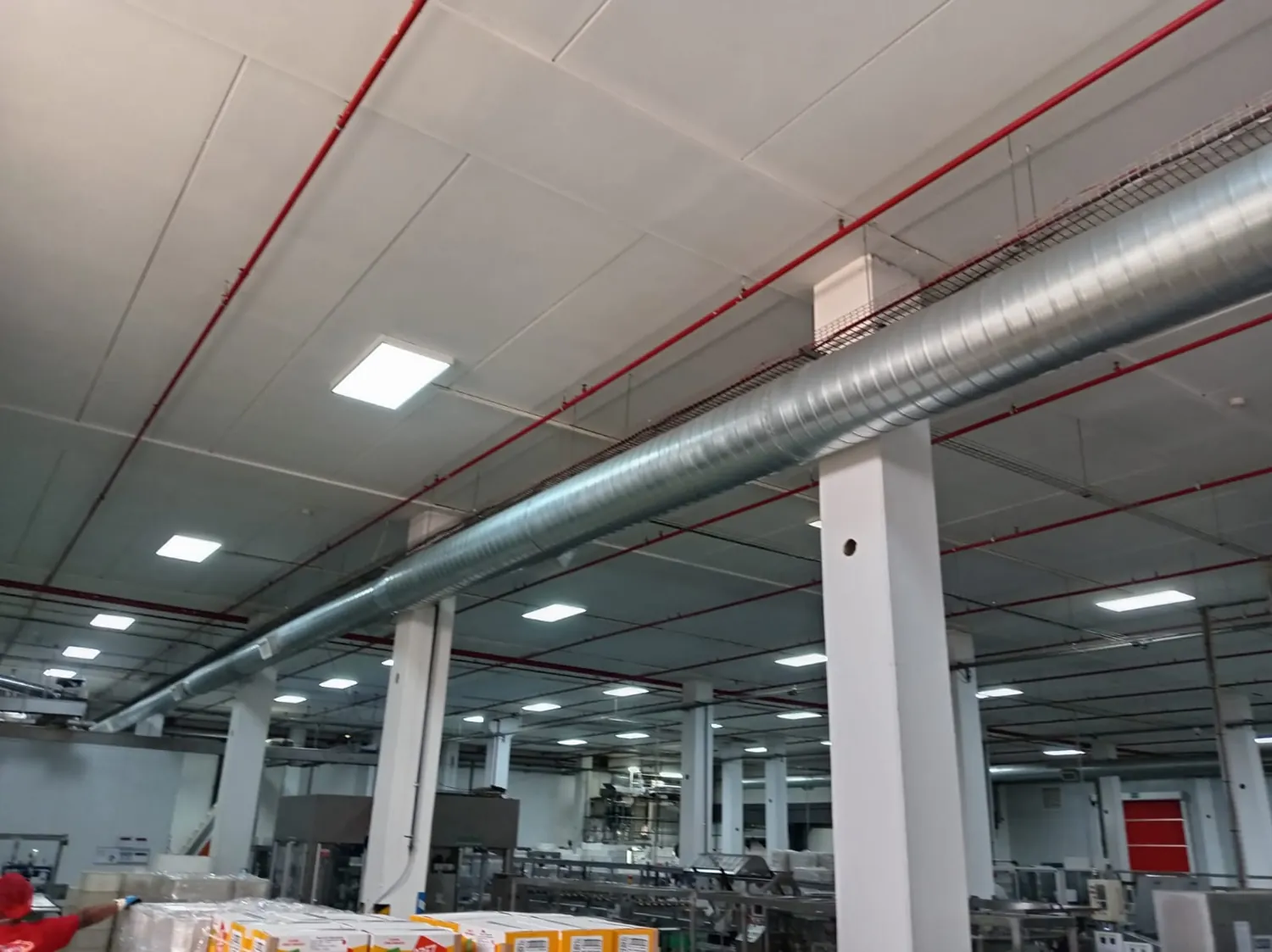
The project requirement
Poor extraction at a machine is not always a failed dust collector. Airflow depends on the combined condition of the hood, ducting, filters, fan and discharge arrangement. We investigate the system as a connected circuit before replacing equipment.
If suction drops only at one workstation, a closed damper, obstructed branch or leaking flexible hose may be involved. If every workstation has weakened, the cause may be across the main duct, filter differential pressure or fan operation. Understanding when the fault began is often as important as the symptom.
Assessment and technical decisions
We ask which machines operate together, whether new take-offs have been added and how the fan is controlled. Filter condition, fan rotation, belt condition, duct deposits and access-door sealing are practical inspection points; measured airflow and pressure can help distinguish competing explanations.
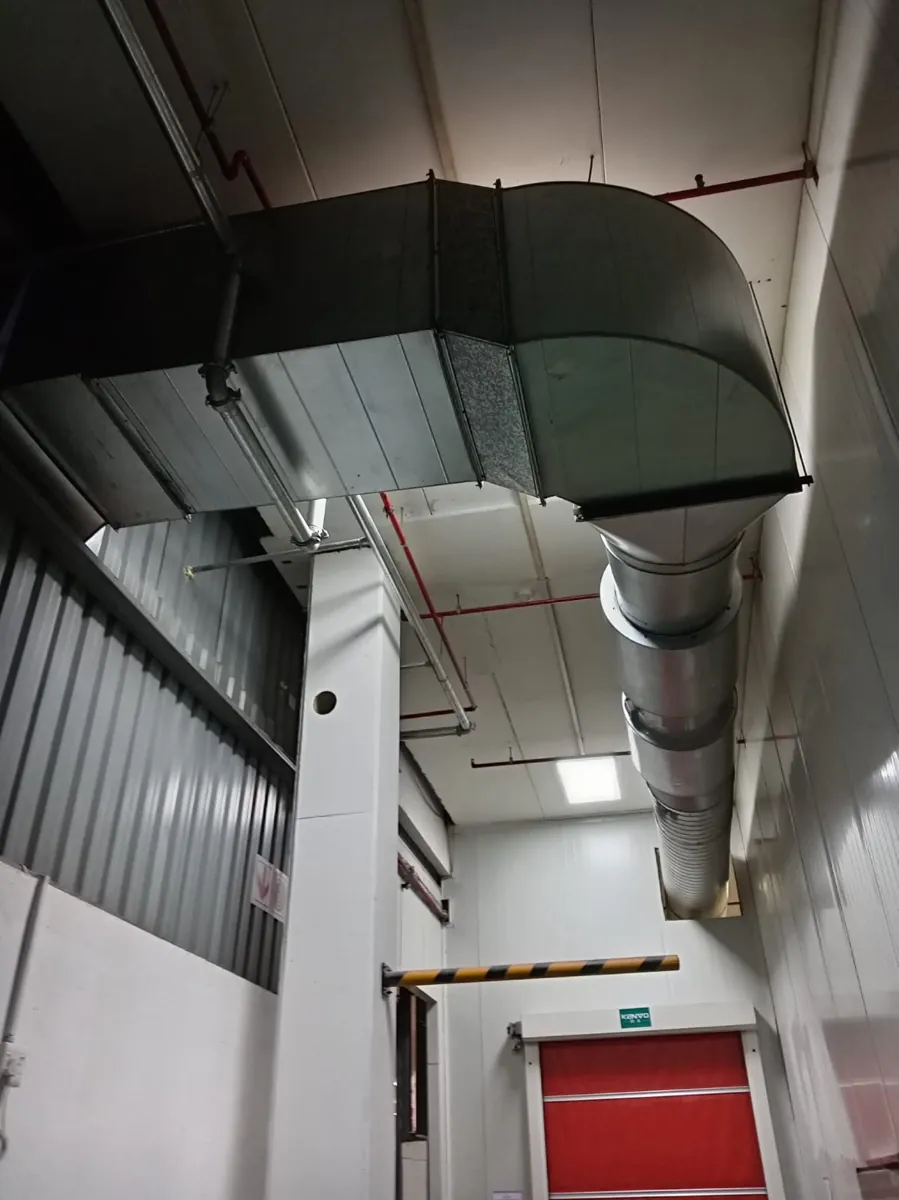
Manufacturing, repair and installation considerations
The repair may be a relatively small correction to a branch connection, or it may require a revised fan duty, additional filtration capacity or a duct system redesign. We explain the likely causes and identify the measurements needed before recommending major expenditure.
Safety and system suitability
Abrupt pressure changes, dust leakage or unusual fan vibration should be treated seriously. Inspection of rotating equipment and potentially hazardous dust requires isolation and appropriate site safety controls.
Information needed for a quotation
Send photos of the affected machines, duct branches and collector, the current fault pattern, model or fan nameplate, maintenance history and any available airflow or static-pressure readings. Also describe any recent production changes.
Long-term performance and handover
After corrective work, capture should be checked at the actual points of use—not only by confirming that the motor runs. Documenting operating conditions helps maintenance teams identify a future deterioration.
Tracing a loss of extraction performance
Poor capture at a process hood is not always a faulty extractor fan. A blocked hood, closed damper, leaking flexible connection, overloaded filter bank or change in machine operation can all alter the available airflow. The fault investigation should follow the complete air path from pickup point to discharge.
Useful observations include which machines are affected, whether the problem began suddenly or gradually, and whether differential-pressure readings, motor-current measurements or filter-cleaning alarms changed. This helps narrow down the problem before dismantling equipment.
Never open filter housings or approach moving impellers while equipment is operating. Safe isolation and a suitable assessment of process hazards must precede intrusive inspection. For a quote, send the site location, equipment photos and a description of the capture problem.
Related services
Explore Industrial Dust Collector Repairs →
Equipment and operating considerations
A dust collector can have a healthy motor and still provide poor capture if filters are heavily loaded, duct branches leak or a hood is placed outside the emission plume. We establish whether suction is low everywhere or only at selected pickup points. Differential pressure, fan direction, damper positions and changes to connected machinery can help narrow the fault. Cleaning a filter without investigating recurring dust loading is not a durable fix. We discuss measurements at the collector and at the relevant extraction branches before recommending modifications.