
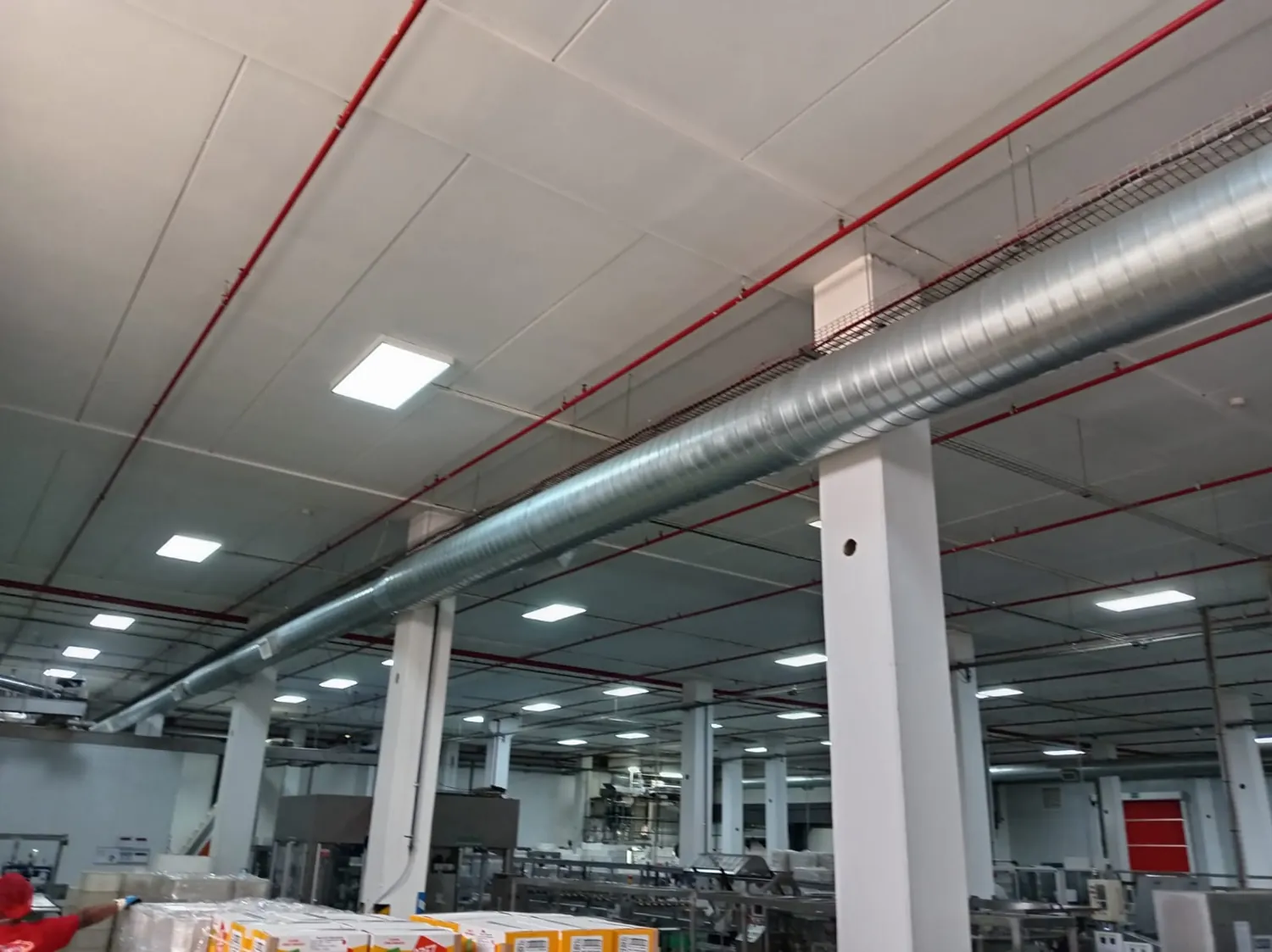
What the work involves
Ductwork linking industrial machines to fans and filtration units must preserve capture at the source without introducing unnecessary pressure losses. For Port Elizabeth engineering premises, the practical route through existing plant often determines the complexity of the job.
Obstacles may include bridge cranes, mezzanines, tall storage racks and overhead cable trays. Long unsupported sections, abrupt transitions and worn elbows can create leakage, vibration and persistent maintenance problems.
Equipment assessment and diagnosis
We evaluate existing duct dimensions, fan duty, hood arrangement and any sections where deposits accumulate. Branch additions must be checked against the capacity of the connected collector and extraction fan, especially where multiple stations operate together.
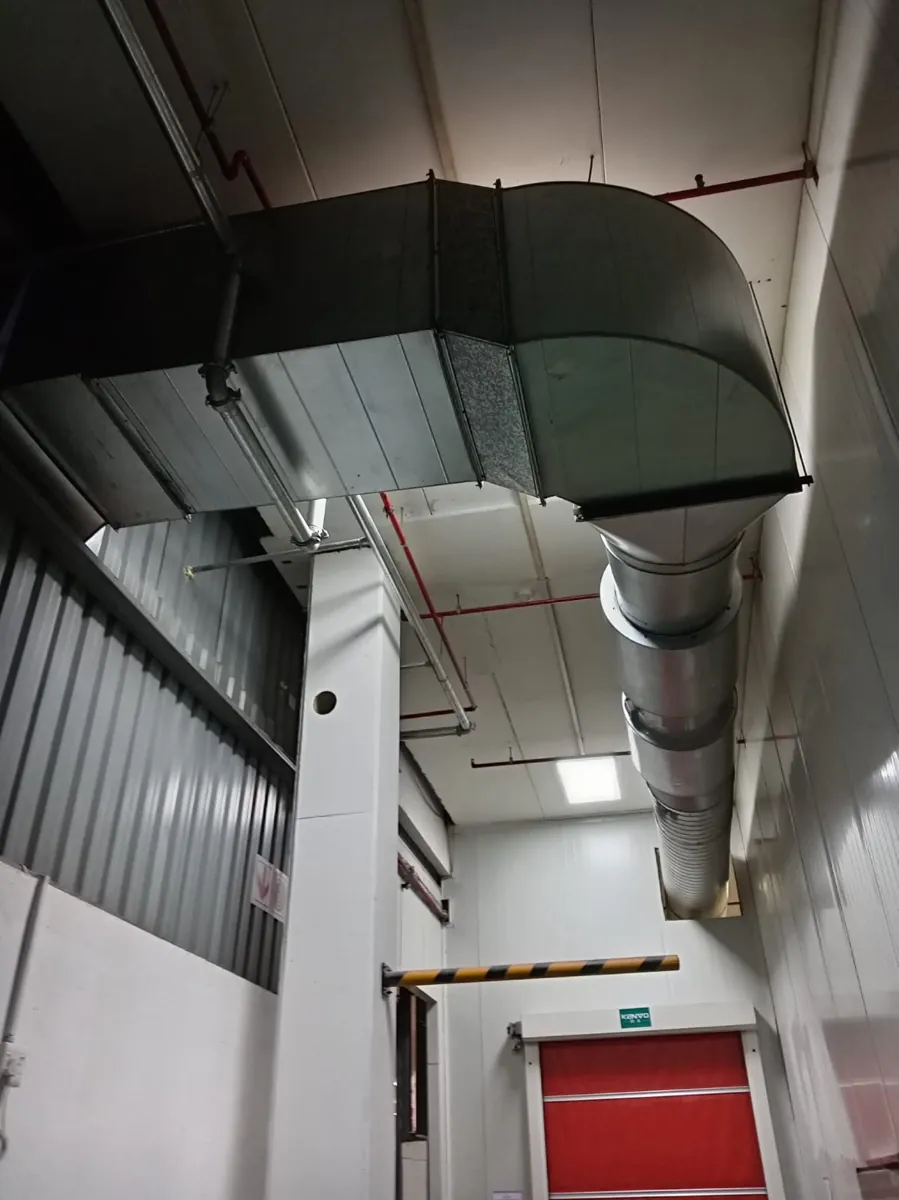
Installation, fabrication or repair scope
Work may involve fabricated branches, transitions, replacement wear sections, supports and accessible cleaning points. Fabrication details and installation sequence should be coordinated with production shutdowns and the lifting arrangements available on site.
Technical suitability and safe operation
Dust type, conveying velocity, equipment temperature and fire or explosion hazards must inform material selection and design; an arbitrary duct diameter cannot be treated as an engineered specification.
Equipment and operating considerations
Port Elizabeth manufacturing premises may contain lengthy overhead extraction runs with limited access near cranes or production lines. We discuss safe lifting, support spacing, alignment to existing machinery and where access doors are needed. Added bends and extended branches can increase resistance, which should be considered before keeping an existing fan unchanged. A quotation benefits from a measured route and details of any abrasive dust or process fumes to ensure the duct construction matches the actual duty.
Requesting a project quotation
Send an overhead layout if available, photographs of the intended route, material being transported, existing duct measurements and a list of machines to connect.
Related engineering service
View related technical services
Technical decisions that affect the result
Overhead extraction ductwork must be routed with machinery access, cranes, maintenance platforms and future cleanout points in mind. Each branch and elbow adds resistance, so an extension should be checked against the fan and collector already installed. Abrasive particles can wear bends long before straight duct sections appear damaged.
For Gqeberha or Port Elizabeth projects, send a proposed route, connection diameters and photographs of structural constraints. Local repair may be appropriate for an isolated leak; widespread wear or changes to the operating duty may justify a more extensive replacement. Fabricated pieces should have supports and accessible joins agreed before installation.
Existing ductwork and installation interfaces
An industrial duct route can be physically neat but still perform poorly if transitions create excessive pressure loss or dust deposition. We would examine connection sizes, branch junctions and available cleaning access before agreeing fabricated sections. The project plan should include how ducts will be lifted over production machinery and whether equipment can be isolated during connections. Material wear and any hazardous airstream requirements must guide the chosen construction.