
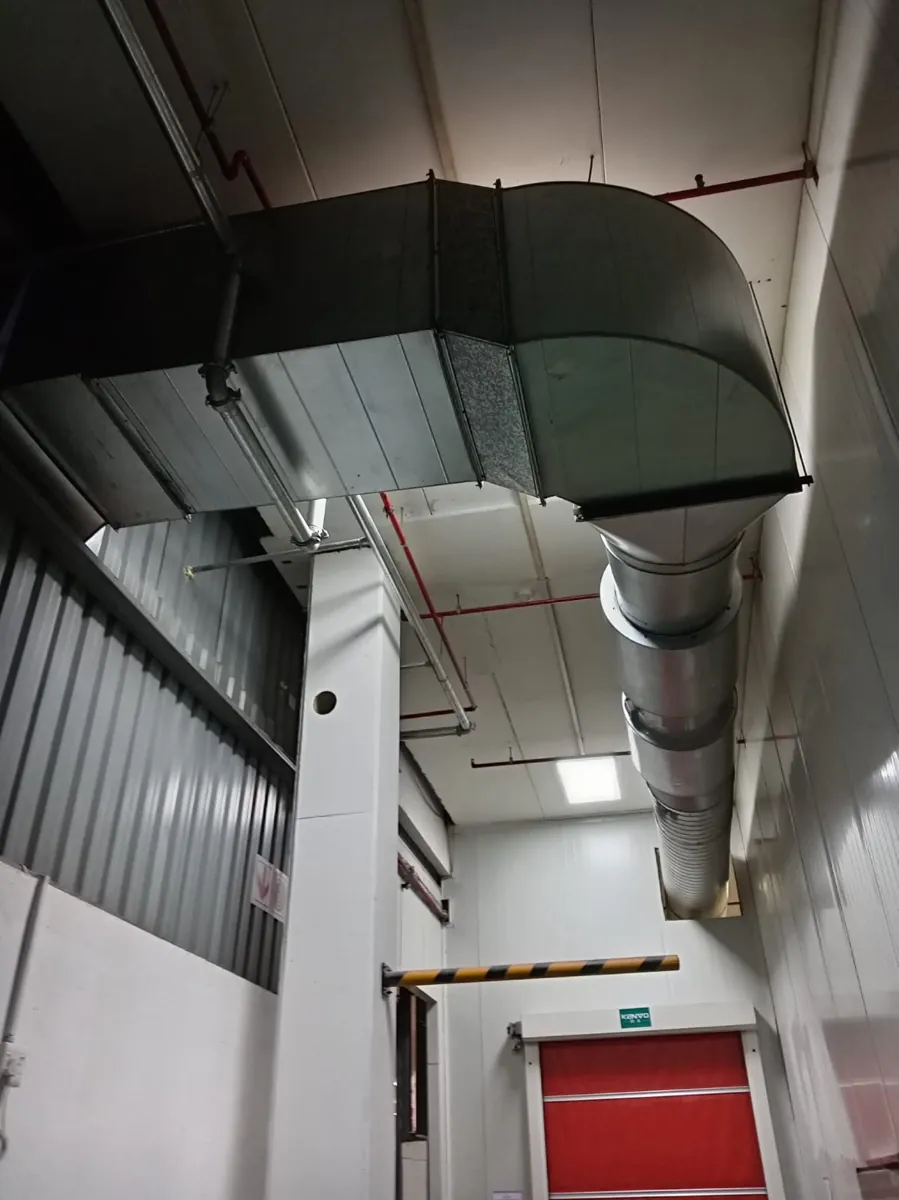
Air movement in busy dispatch areas
Forklift activity, idling vehicles, frequently opened dock doors and high storage racks can create changing ventilation needs. We distinguish between general heat removal, vehicle-emission control and local extraction at a particular loading operation. The solution depends on actual hazards, vehicle types and how long doors remain open during shifts.
Practical roof and wall extraction
Large wall fans, roof extractors, make-up air and existing natural ventilation may all influence airflow. We examine fresh-air paths, security requirements, weather exposure and whether warehouse aisles obstruct intended movement. Additional fans may not correct air quality if the contaminated source remains uncontrolled near staff.
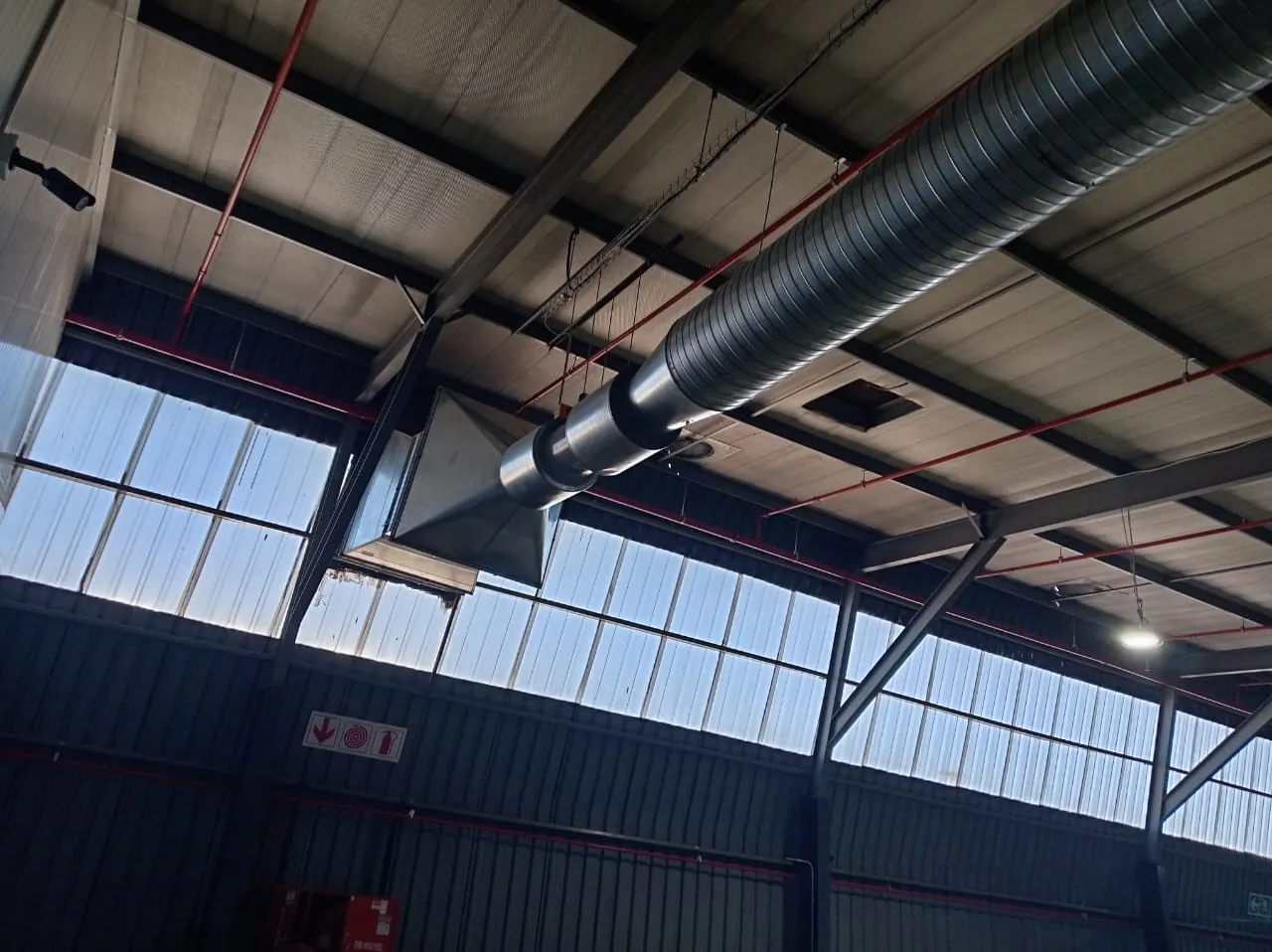
Coordination with operational safety
Equipment position should avoid obstructing dock levellers, racks, sprinklers, doors or vehicle clearances. Where diesel exhaust or chemical emissions are present, appropriate exposure assessment and source control are required. We discuss duty cycles, controls and maintenance access so the system works through the actual dispatch schedule.
Request a site-based quotation
Equipment and operating considerations
Loading bays experience changing airflow whenever dock doors open. We examine vehicle idling, prevailing air paths and whether fumes could migrate into occupied warehouse zones. General roof extraction can remove accumulated heat, but localized exhaust may be necessary where engines operate near staff. We consider equipment placement around dock levellers and vehicle clearances. A quotation should identify door usage patterns, loading peaks and any battery charging or hazardous storage nearby.
Speak to our industrial projects team
Request an industrial extraction assessment
Practical ventilation choices for the building
Loading bays have variable conditions because vehicle movement, door positions and external winds alter the airflow throughout a shift. High-level heat extraction may help with heat buildup but does not replace capture of diesel exhaust at a source where engines idle indoors. We would map where staff work, how long vehicles remain and whether dock seals or curtains restrict replacement air.
A practical assessment should identify the loading pattern, roof height, adjacent occupied rooms and the potential effect on warehouse pressure. New exhaust openings need a controlled air-inlet route and safe maintenance access. Where harmful gases or process emissions are suspected, site-specific exposure and safety expertise is required before choosing equipment.
Airflow evaluation and equipment access
Loading-bay improvements may involve fan repairs, alterations to wall openings or local exhaust arrangements near defined vehicle positions. Before fabrication, the layout should show reversing routes and moving dock equipment so ducts or grilles do not create impact hazards. Ventilation control needs to reflect actual operations: a system that only runs during office hours may miss the busiest loading period, while permanent high-speed operation may be unnecessary for intermittent heat relief.
We would confirm whether dock-level airflow affects neighbouring offices, since exhaust alterations can change pressure at internal doors and draw unwanted air between occupied spaces.