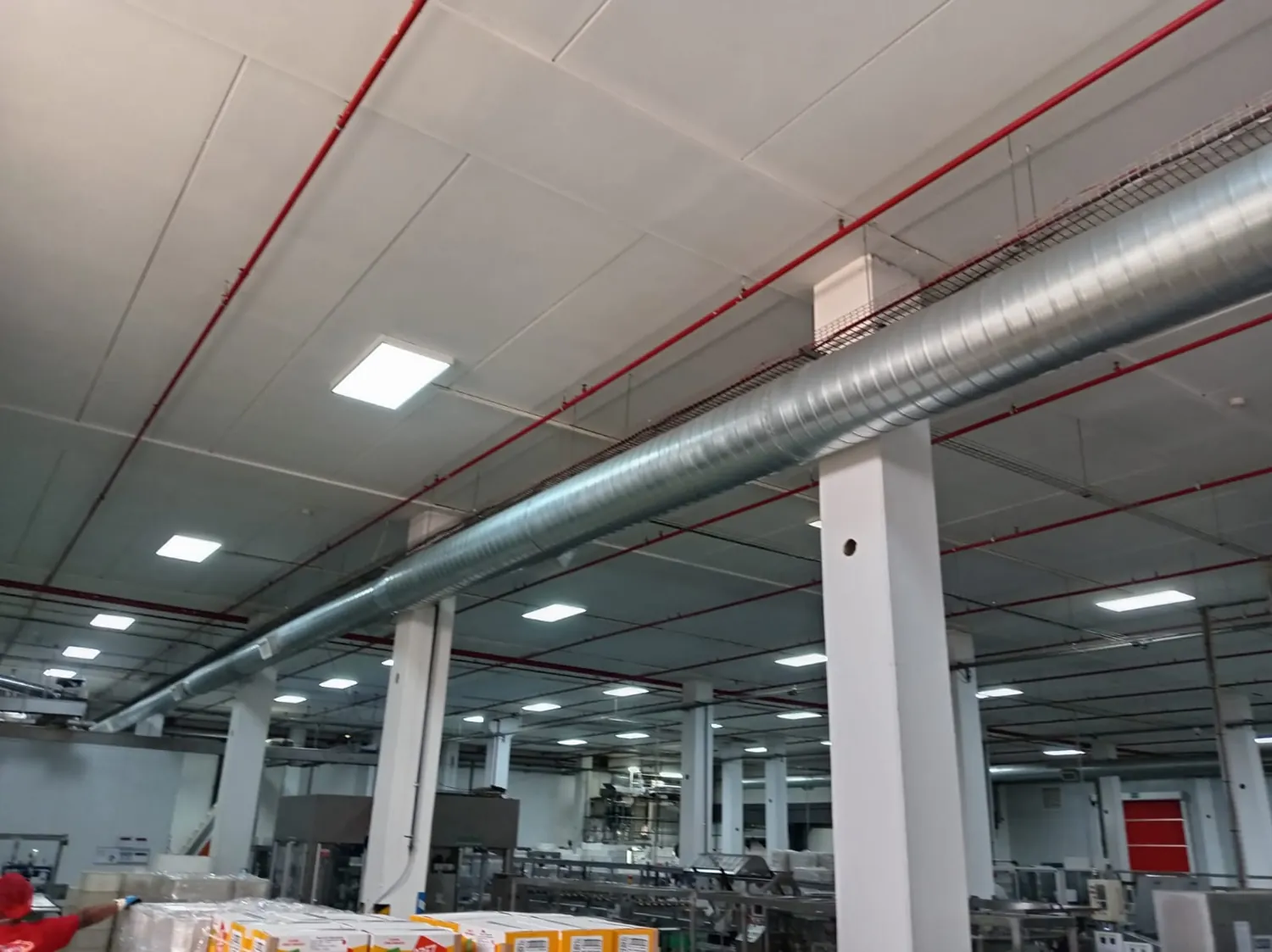
The work and operating conditions
Production workshops and dry-material handling sites in Bloemfontein can create airborne dust at cutting, transfer and packaging points. Capture close to the source is generally more controllable than relying on a building exhaust fan.
Dry conditions and changing production schedules can make dust escape highly visible, but visible dust alone does not establish concentration or exposure levels.
How we investigate the requirement
We identify the material, machinery, pickup position, possible duct restrictions and collector condition to determine whether repair or new fabrication is appropriate.
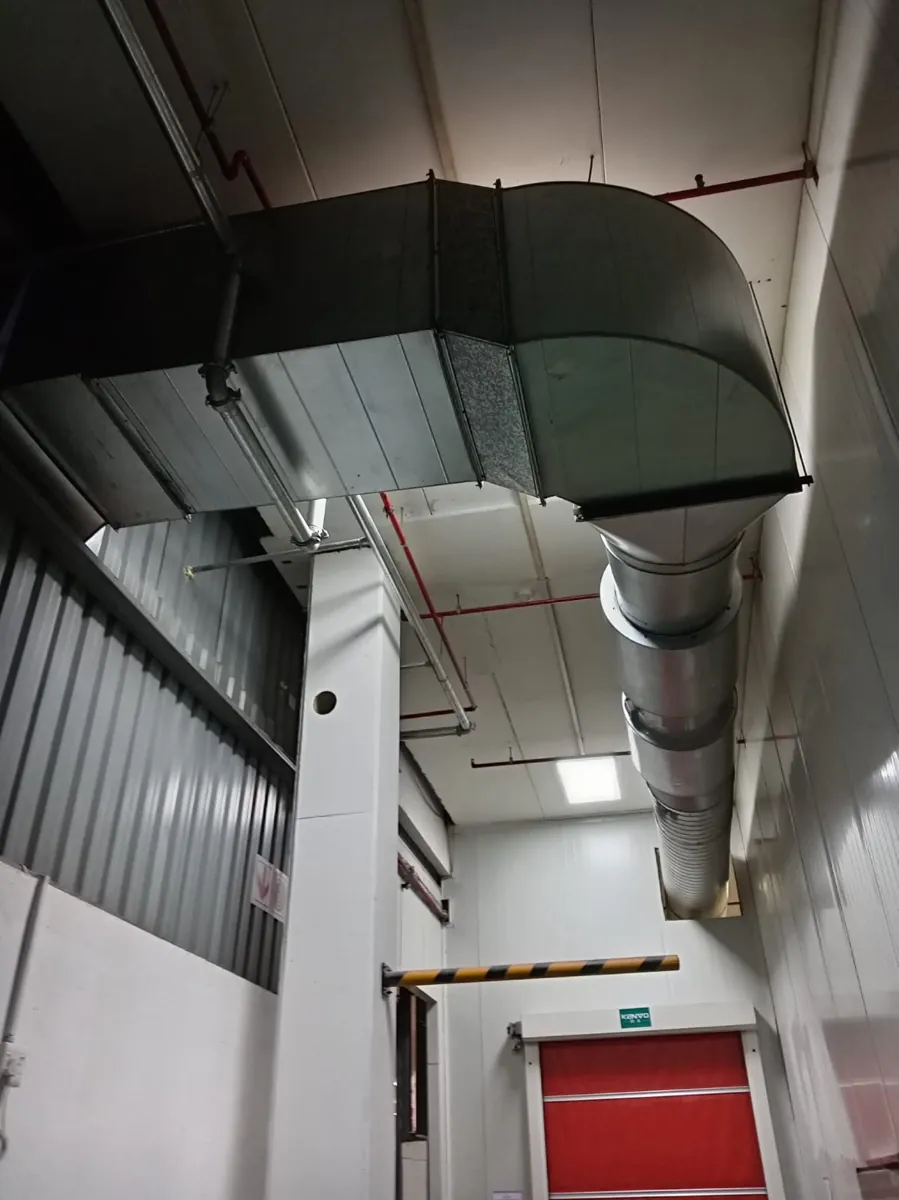
Manufacturing, installation and repair approach
Our in-house manufacturing capability allows collector and ducting requirements to be scoped together, including filter servicing, discharge and fan interfaces.
Site safety and equipment selection
Hazardous, combustible and respirable dust require appropriate professional assessment and verified control measures.
Information to include in your quotation request
Provide photos of dust-generation points, equipment list, operating shifts and any existing extraction drawings or readings.
Discuss your Free State project
Call 070 602 7216 or request a project quotation.
Equipment and operating considerations
Bloemfontein manufacturing and agricultural handling sites may release dust during cutting, transfer or packaging. We distinguish coarse material that settles in ducts from fine airborne particles requiring effective capture and filtration. A single collector might serve multiple stations, but simultaneous operation and branch length change how it performs. We ask for process descriptions, machine photographs and how collected material can be emptied safely. Hazard assessments depend on the actual dust, particularly for combustible organic material.
Technical decisions that affect the result
A collector serving a woodworking bay will not necessarily suit grain transfer or mineral handling simply because the airflow seems comparable. Filter medium, particle loading, waste discharge and ignition hazards vary by process. We start by locating the dust release and learning whether several machines run together; that determines the useful capture and ducting questions before manufacturing is discussed.
For Bloemfontein facilities, changes in seasonal throughput or production shifts can reveal weaknesses that are not apparent during quiet hours. We would ask which operations create visible deposits, what is already connected to an extraction line and how material is emptied. Dust explosibility, operator exposure and any food-handling requirements need competent assessment as part of a safe solution.
Operating requirements and practical checks
A dust extraction proposal should distinguish source capture for a specific machine from wider upgrades to an existing collector network. Where several stations run intermittently, the number operating at once can alter branch requirements significantly. We would include the arrangement of waste bins and filters in the scope so maintenance does not obstruct production or food-handling zones. Any performance claim should be checked against operating conditions established during site assessment.