
When your operation needs a properly scoped solution
Saws, sanders and planers produce very different amounts and sizes of wood dust. A workshop may have good suction at one machine but poor extraction elsewhere if too many branches operate together. We plan woodworking extraction around machine connections, simultaneous use and the collector ability to handle the material safely.
What we review on site
We review machine types, connection sizes, operating sequences and where fine dust escapes beyond the intended ports. Branch routing, collector position and waste discharge all affect everyday usability. Additional future machines should be discussed early, as an undersized network is difficult to expand without affecting existing performance.
How we approach the work
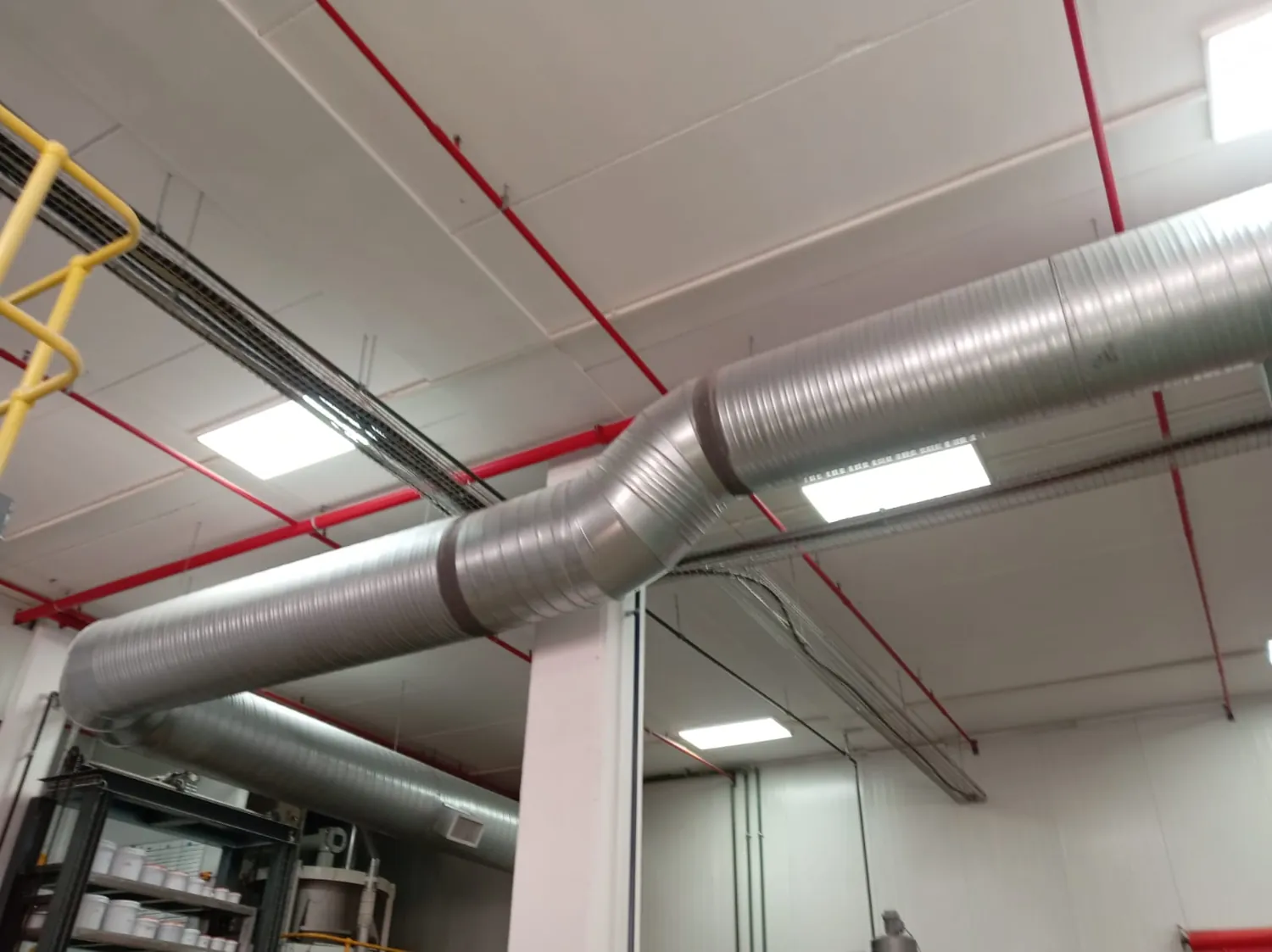
Our service scope can include industrial ducting, fan installation, dust collector manufacturing to an agreed specification and repairs to existing extraction networks. For workshops suffering frequent blockages, we examine the duct layout and the handling of chips and fine dust rather than focusing solely on replacing the fan.
Technical suitability and safe operation
Wood dust can be combustible and presents health risks. Appropriate hazard assessment, controls and equipment selection are necessary; an ordinary metal collector housing is not automatically a complete safety solution.
Information that helps us prepare your quotation
List the machines, connection sizes if available, operating patterns, material types, floor layout and current collector details. This information helps us define what needs to be assessed for manufacturing or installation.
Simultaneous machine use
A collector connected to several machines must be considered against the number expected to operate at once. Opening additional branches can materially change the available suction at each connection.
Equipment and operating considerations
A woodworking extraction network should be planned around saws, sanders, planers and any machines likely to run simultaneously. Coarse chips and fine sanding dust impose different transport and filtration demands. We consider branch isolation, cleanout points and whether the collector can be emptied without returning dust to occupied work areas. Wood dust can ignite under certain conditions, so appropriate hazard assessment is required. A quotation should include machinery connections, the workshop layout and operating patterns.
Planning the project with your operations team
Start with your site and equipment details
Operating requirements and practical checks
In a woodworking workshop, the most visible chip buildup may occur at machines farthest from the collector or where branch controls are poorly arranged. We discuss which tools operate at the same time and whether large chips are carried reliably through the duct network. Maintenance access is particularly important where material accumulates at elbows. Collectors intended for wood dust must be specified with competent consideration of combustible dust risks, not treated as ordinary housekeeping vacuum systems.