
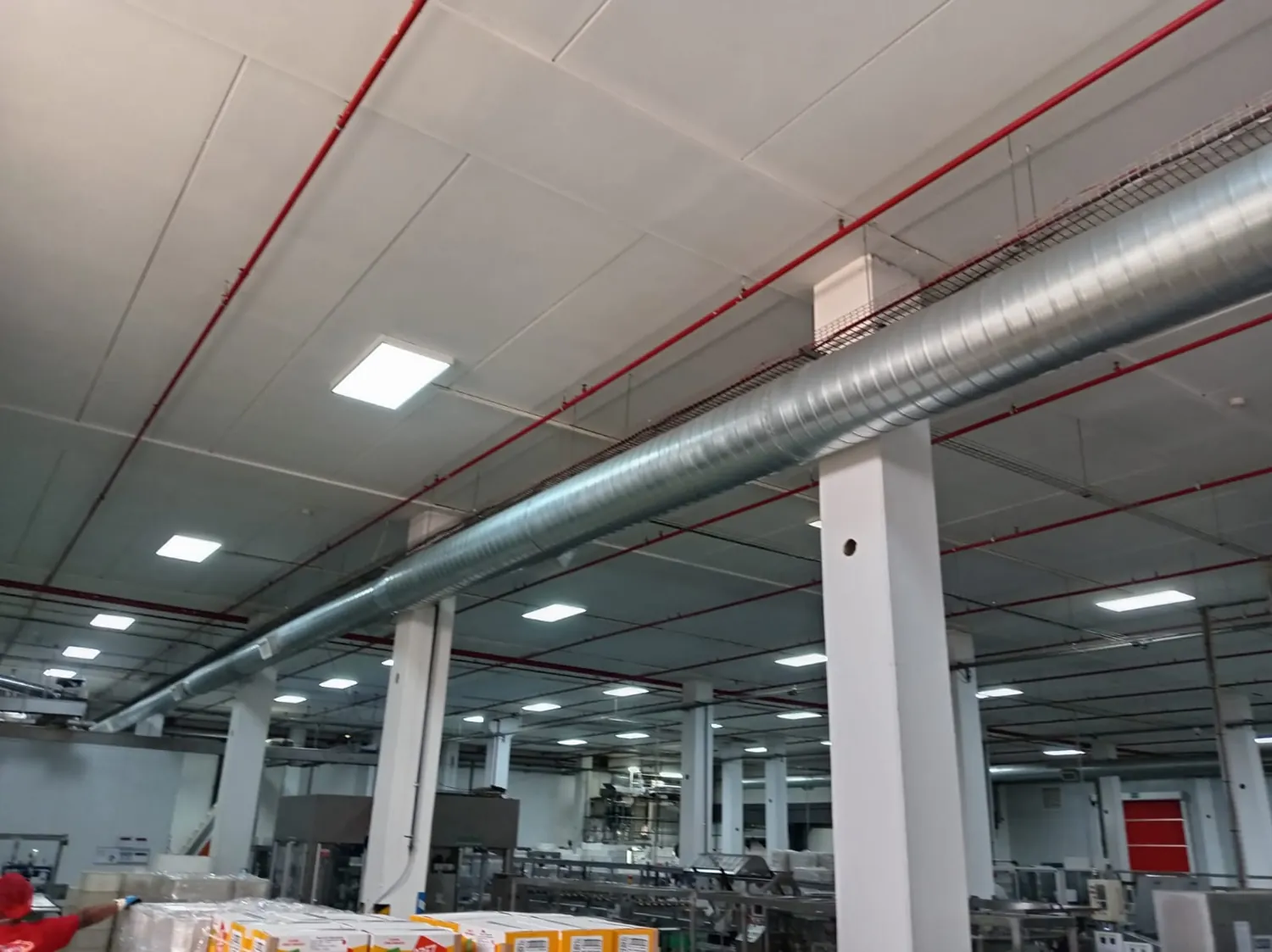
Cooling within industrial operations
Industrial offices, production support rooms, electrical control spaces and selected processing areas can have very different thermal needs. Our industrial HVAC installation discussions begin by defining the area requiring conditioning and the consequences of unstable temperature. We distinguish comfort cooling from process-critical cooling, because their design criteria, resilience and commissioning requirements can be materially different.
Heat loads and environmental conditions
Solar gain, occupants, motors, nearby ovens, electrical cabinets, dust, humidity and outside air all influence the duty. Equipment placed close to industrial extraction outlets may be exposed to hot or contaminated discharge. We assess potential conflicts between make-up air, extraction systems and cooling rather than treating the air-conditioning package as independent of the building.
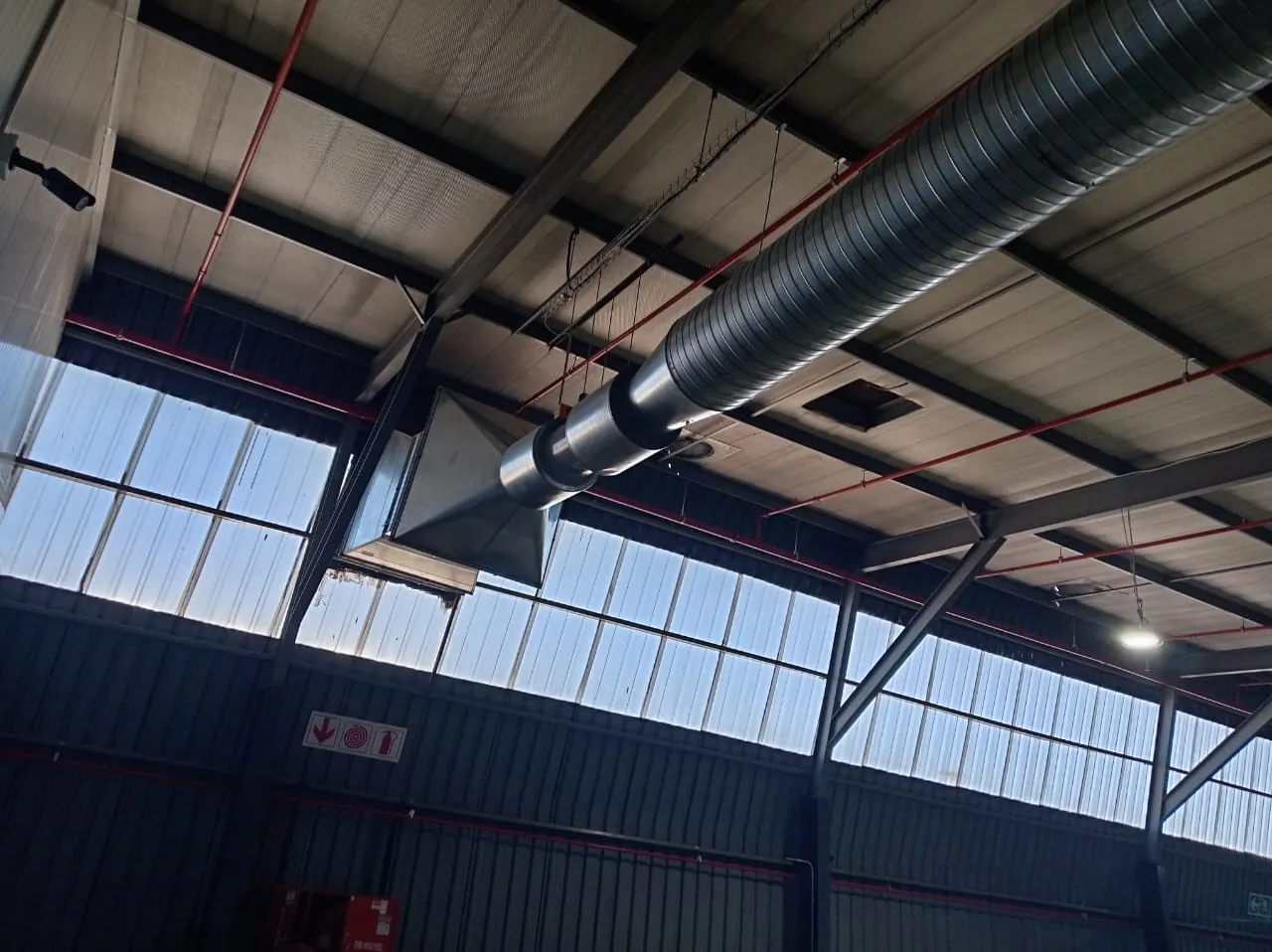
Planning installation around production
Plant shutdown windows, crane access, roof loading, lifting restrictions and electrical interfaces must be understood before equipment is ordered. Ducted systems need practical routes through existing services, while outdoor units require appropriate clearances and safe service access. The specification should address corrosion or contamination where those conditions are present.
Commissioning and operational handover
A successful project requires more than switching the unit on. Appropriate tests, controls checks, drainage checks and confirmation of the agreed operating criteria form part of defining completion. Work involving electrical systems or refrigerants must be performed by suitably competent people under the applicable requirements.
Prepare your enquiry
Tell us what the area is used for, operating temperature expectations, equipment heat output if known, hours of operation, site access restrictions and whether the space has existing ventilation or extraction. Drawings, photos and a planned shutdown date allow a more useful initial technical conversation.
Equipment and operating considerations
Industrial HVAC planning must account for operating processes alongside occupancy. Machinery heat, dust loading, door openings and shift schedules can make a standard office cooling approach unsuitable. We review how the space is used and where cooled air is actually needed before selecting equipment types. Duct routes, outdoor plant locations and service access should not interfere with production. Where harmful emissions are present, separate source extraction and appropriate exposure controls remain essential.
Discuss your project with our team
Industrial conditioning requires process awareness
Industrial spaces can have substantial heat gains from machinery, roof loading and door openings. Where cooling serves a production process rather than employee comfort, the required temperature range and reliability expectations should be established early. We distinguish process cooling, general ventilation and conditioned air before proposing an arrangement.
Integrating plant and mechanical services
Equipment location, intake cleanliness, service access and power requirements affect long-term operation. We review dust levels and nearby extraction discharges to avoid unsuitable intake positions. Site coordination should cover commissioning, maintenance clearance and how installation can proceed around production.