
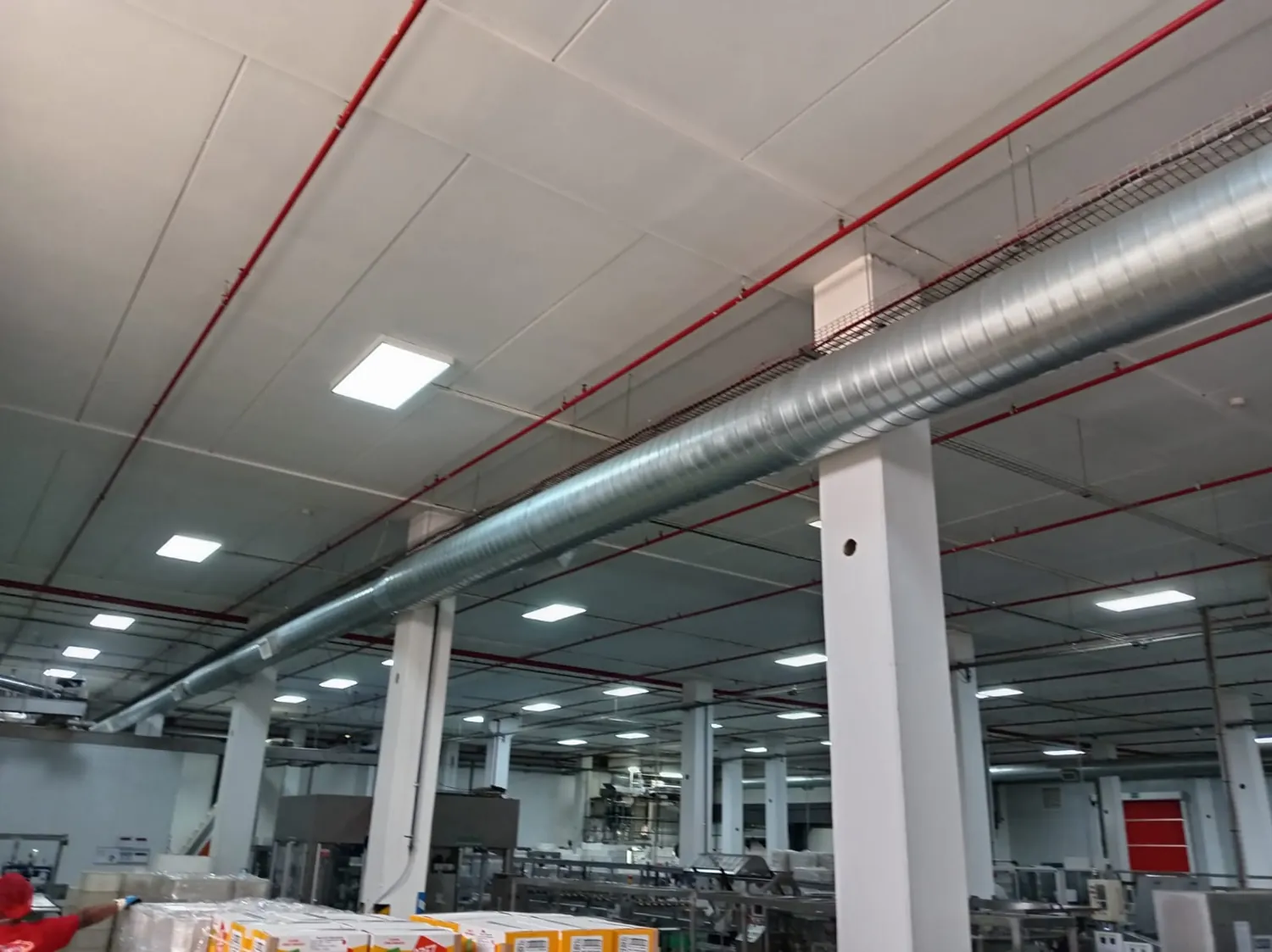
The work and operating conditions
Large storage and dispatch facilities in Brits can develop heat pockets under roofs, especially around loading operations and areas with limited cross-flow.
Dock doors, high-level storage racks and roof geometry affect incoming and outgoing air paths. General warehouse ventilation is not a substitute for capturing diesel exhaust or industrial process contaminants at source.
How we investigate the requirement
We review occupied zones, heat sources, current fan operation and any restrictions on external air entry, then separate thermal comfort goals from contaminant-control requirements.
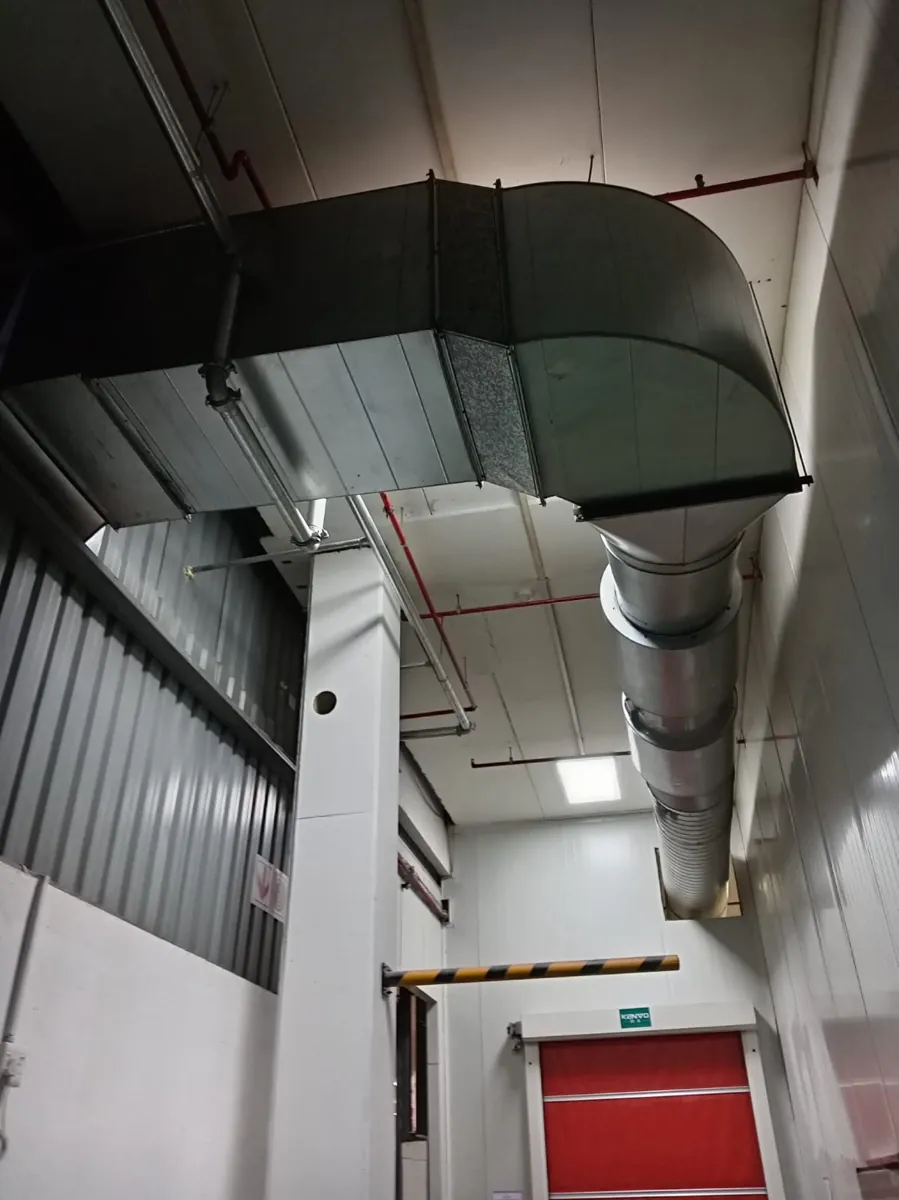
Manufacturing, installation and repair approach
Possible solutions include roof or wall exhaust equipment, planned makeup-air openings, fan servicing or ducted solutions for specific enclosed areas.
Site safety and equipment selection
Vehicle exhaust and hazardous stored materials may need specialist controls beyond general airflow improvements.
Information to include in your quotation request
Provide floor area, roof height, occupancy patterns, photos of loading docks and details of any existing mechanical ventilation.
Discuss your North West project
Call 070 602 7216 or request a project quotation.
Equipment and operating considerations
Warehouses around Brits may experience heat accumulation above stored goods and weak airflow in occupied picking areas. We consider roof height, door usage and where incoming replacement air can reach staff without passing through dusty operations. If forklifts or charging processes emit contaminants, a separate source-specific review is needed. We ask for a plan of loading bays and racking, existing fan positions and the hottest occupied periods before considering wall or roof equipment.
Practical ventilation choices for the building
Ventilating a high-bay store involves more than extracting the warm air above the racking. Fresh air must be able to enter and reach occupied picking stations, while open loading doors can reverse expected airflow paths. We would review the roof height, access aisles, existing vents and the times when working conditions are poorest before proposing fan positions.
At a Brits warehouse, movement of forklifts or other vehicles may introduce contaminants that need source-specific treatment rather than a general roof fan. Include a drawing of racking, mezzanines and loading openings with the enquiry. New installations should be arranged so fans and dampers can be serviced without taking substantial storage space out of operation.
Airflow evaluation and equipment access
In a warehouse with extensive racking, an incoming-air opening can be partially obstructed by storage layouts, leaving some occupied aisles stagnant. The ventilation plan should therefore be checked against real aisle widths and future rack alterations. Fan supports and control switches also need accessible positions. A scoped proposal should distinguish a modest repair of existing equipment from a redesigned airflow route and set out how any performance improvement will be checked.