
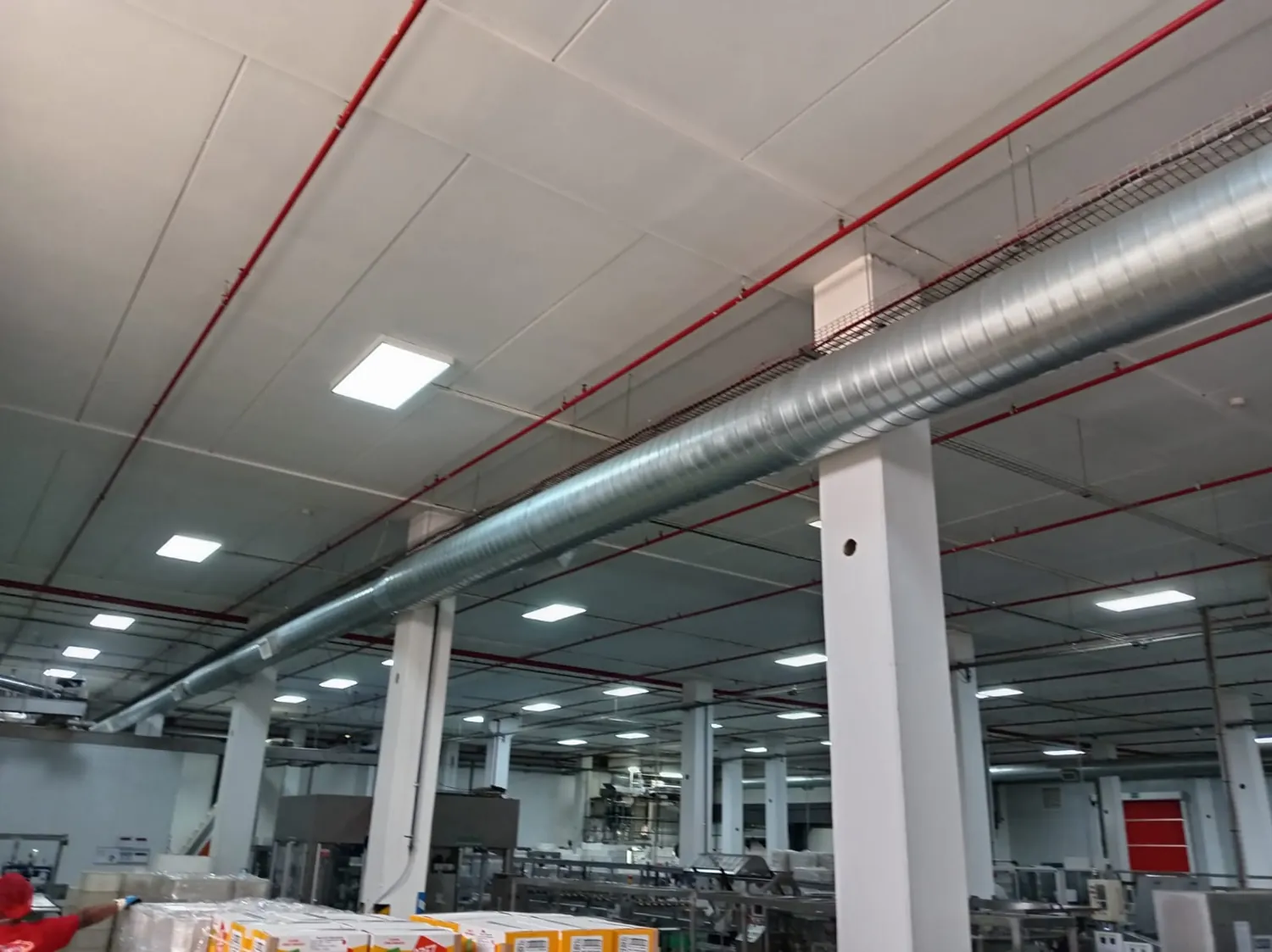
The work and operating conditions
Manufacturing and processing sites around Rustenburg may need an extraction system built around equipment footprint, material properties and duty cycle. We fabricate dust collectors in-house from our Kempton Park base.
A collector serving abrasive process dust has different wear and filtration considerations from a collector supporting light workshop dust.
How we investigate the requirement
We review source quantities, pickup design, particle behaviour, available power and the required service access before selecting a practical equipment configuration.
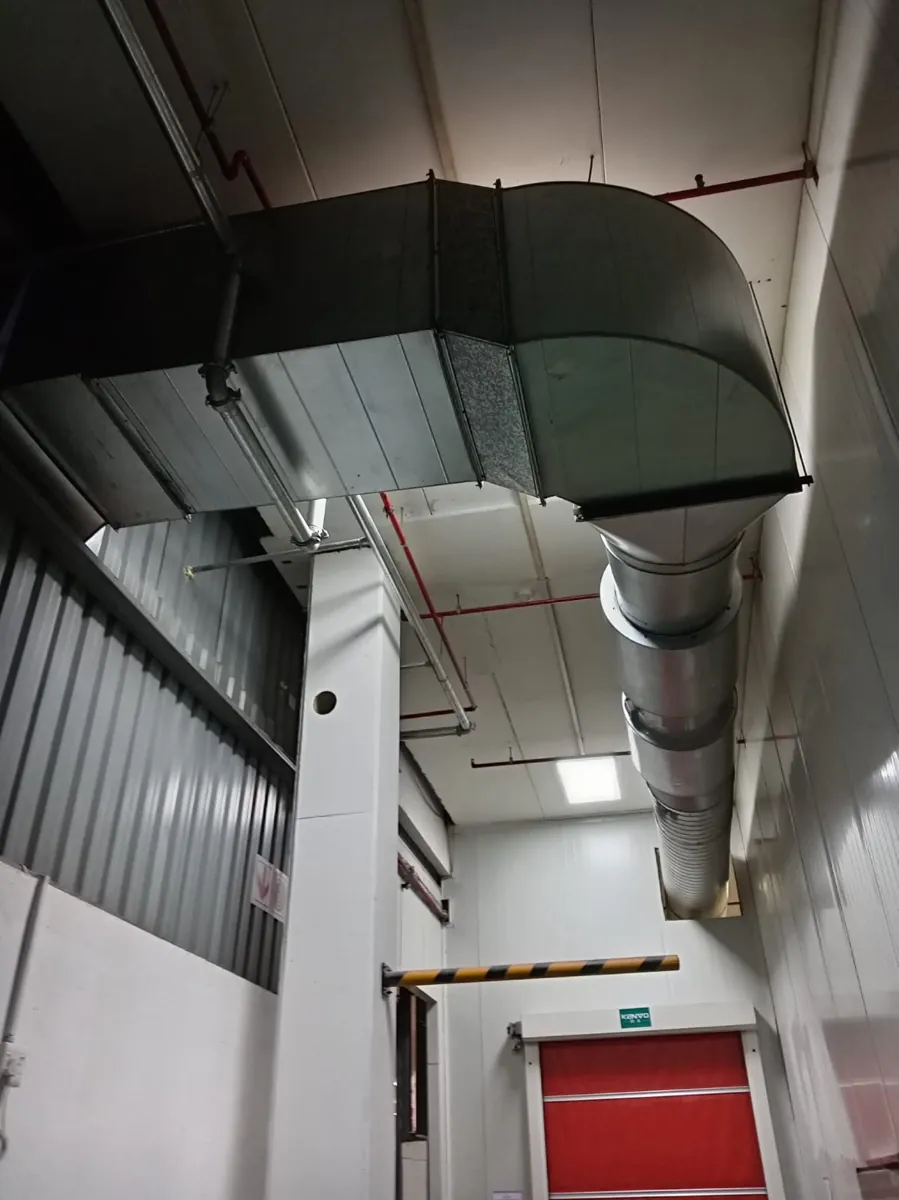
Manufacturing, installation and repair approach
The scope may include collector fabrication, filter arrangements, hoppers and discharge interfaces, fan connections and coordinated ducting.
Site safety and equipment selection
Any potentially combustible or hazardous dust must be separately assessed; no protection rating can be inferred from a general manufacturing enquiry.
Information to include in your quotation request
Provide a plant layout, material details, target workstations, duty hours and photographs of the intended installation area.
Discuss your North West project
Call 070 602 7216 or request a project quotation.
Equipment and operating considerations
For workshops and material-processing facilities around Rustenburg, abrasive dust can influence inlet wear and maintenance intervals. We examine how material moves between machines and which transfer points release the most airborne solids. A collector designed for a single enclosed machine may not suit an open conveyor transfer without adequate hood capture. We discuss wear areas, discharge connections and whether sections can be removed for future overhaul. Fabrication should proceed against an agreed process duty and site arrangement, not a generic catalogue capacity.
Manufacturing scope and workable maintenance access
An in-house fabricated collector must be specified for the actual particulate stream rather than selected solely by external dimensions. The shape of the dirty-air inlet, filter access and material discharge all influence how the housing can be built and maintained. For mineral-handling applications, abrasive loading and dust disposal may be significant design considerations.
For Rustenburg enquiries, provide material information, extraction points, planned operating hours and where the collector could stand. It is also important to identify existing fans or ductwork that will remain in use. Potential combustible, toxic or otherwise hazardous dust requires appropriate specialist review; collector fabrication alone is not a substitute for a complete engineered protection strategy.
Manufacturing details to confirm before fabrication
For a collector intended to handle abrasive mining-related dust, workshop fabrication decisions may include replaceable wear sections, access to the inlet and how the hopper empties into the site's waste-handling process. These details should be confirmed on drawings before construction. We also consider whether transported components can reach the final position through existing roads and access ways. Filter size should never be selected without defining the required airflow and dust properties.