What the work involves
Manufacturing plants and assembly support workshops in Kariega may struggle with high-level heat accumulation, poor supply-air routes or process emissions entering occupied work zones. Each issue calls for a different ventilation response.
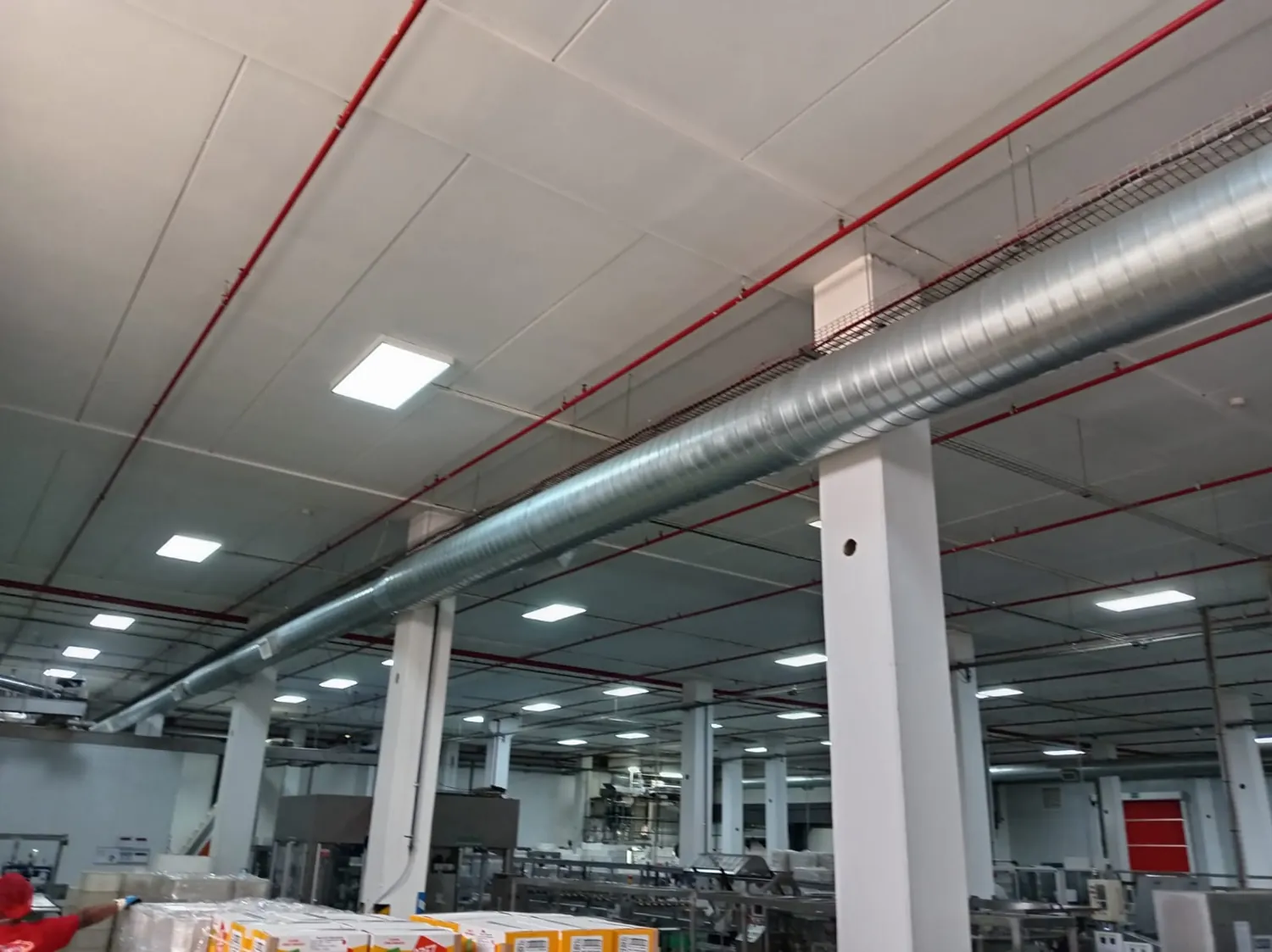
Large industrial roofs can trap heat while cross-breezes and open loading doors change air movement through working areas. Mechanical extraction should be positioned with replacement air in mind, not simply at the point where a roof opening is easiest to make.
Equipment assessment and diagnosis
We review roof configuration, equipment heat sources, existing ventilators and the location of staff and production lines. Where welding or other contaminants are involved, we distinguish localized source extraction from general temperature-control ventilation.
Installation, fabrication or repair scope
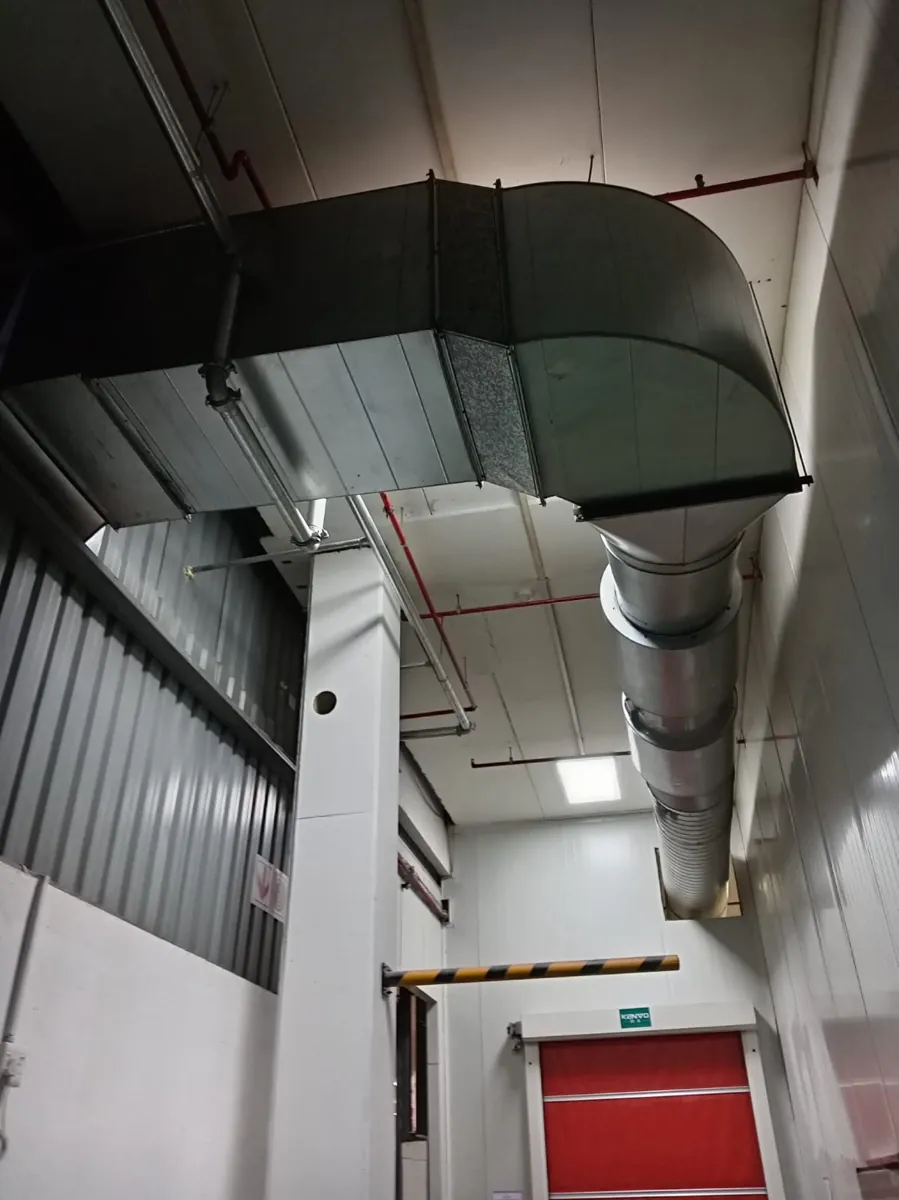
A project can involve roof exhaust fans, ducted extraction, supply-air openings, repairs to existing ventilation or combined equipment. We discuss structural penetrations, controls and cleaning access as part of the proposed works.
Technical suitability and safe operation
General air movement is not a substitute for correctly designed control of hazardous fumes or dust. Air quality and exposure requirements must be assessed for the specific production process.
Equipment and operating considerations
Kariega factories may require heat extraction near equipment rows without drawing process fumes across other occupied zones. We discuss where workers are positioned, roof openings and how loading doors affect incoming air. A local capture arrangement might suit one production line better than general roof exhaust. Maintenance access above machinery is another practical consideration. We ask for building dimensions, process details and photographs of existing fans before planning a ventilation upgrade.
Requesting a project quotation
Provide building dimensions, roof height, shift times, major heat-producing machines, pictures of existing roof fans and a description of when the problem is most severe.
Related engineering service
View related technical services
Practical ventilation choices for the building
A factory can need both general heat relief and source extraction for individual machines. We first establish which areas are uncomfortable or contaminated, whether the building has usable replacement-air paths and which fans or vents already exist. Changes to production layout may create dead zones that a previous ventilation design did not anticipate.
For Kariega manufacturing premises, show occupied workstations, equipment producing heat and the position of loading doors. Roof fans or ducts must be located where maintenance is practical and safe. Welding or dusty processes require their own effective capture assessment rather than assuming whole-building air changes will be sufficient.
Airflow evaluation and equipment access
If the facility has installed new machinery since the original ventilation system was designed, its heat distribution and air paths may have changed. We would identify whether stagnant zones occur near particular machines or between partitions. New roof fans should be supported and located to enable future servicing. Process fumes or dust must be evaluated as a separate control need; a whole-building exhaust calculation does not prove local contaminant capture.