
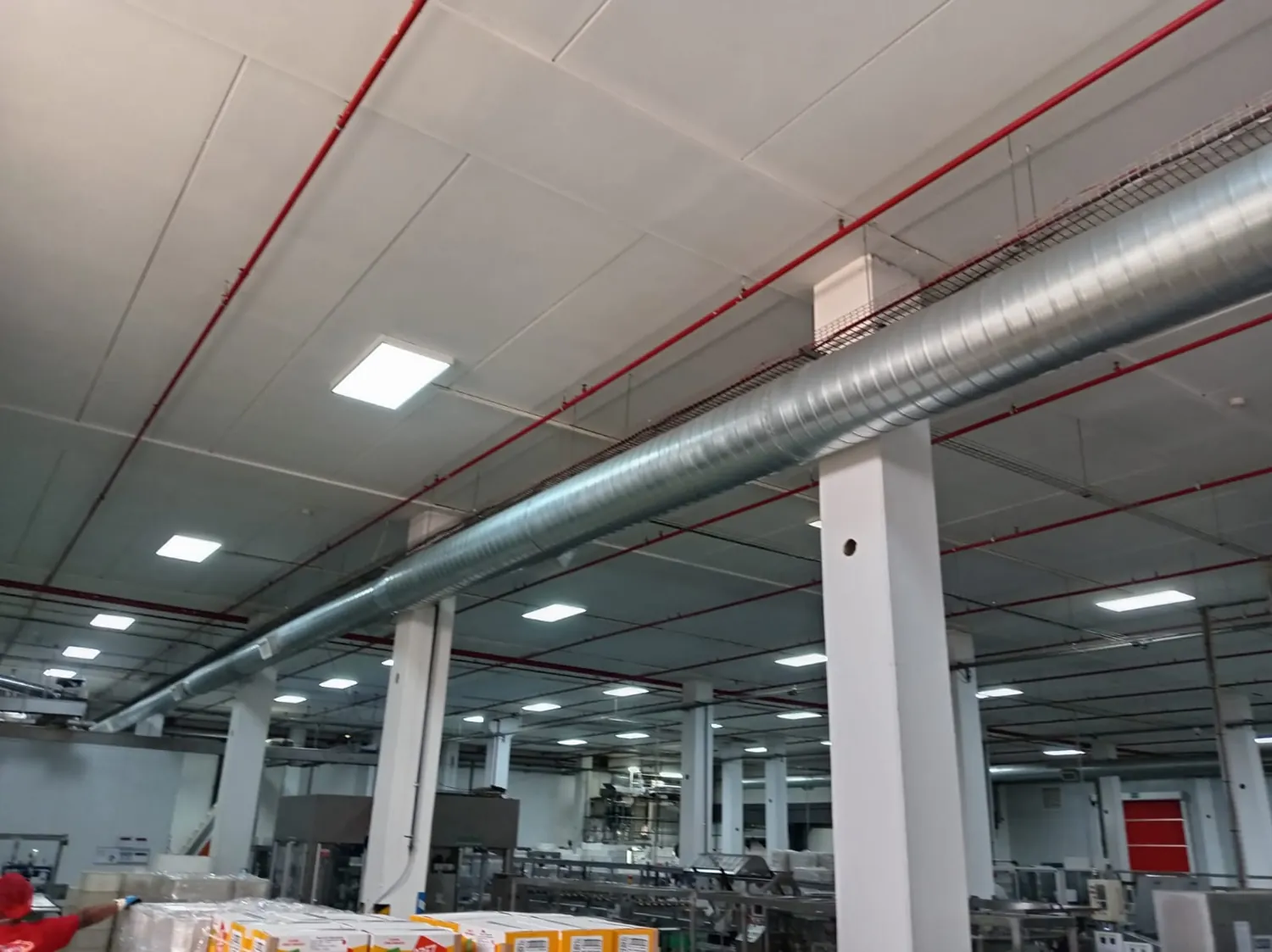
Equipment requirements and operating conditions
Roof-mounted extraction fans can remove stale air, process heat or kitchen exhaust while keeping equipment outside occupied spaces. The mounting location introduces additional requirements for weather protection, structural support, access and discharge arrangements. We plan rooftop fan installations around the actual roof and the air stream being extracted.
How we scope the work
We review roof type, available penetrations, proposed fan location, lifting access and the route from the inside ductwork. The intended exhaust may call for different fan construction depending on grease, dust, heat or corrosion. Space for maintenance and separation from fresh-air intakes also matters when choosing the installation position.
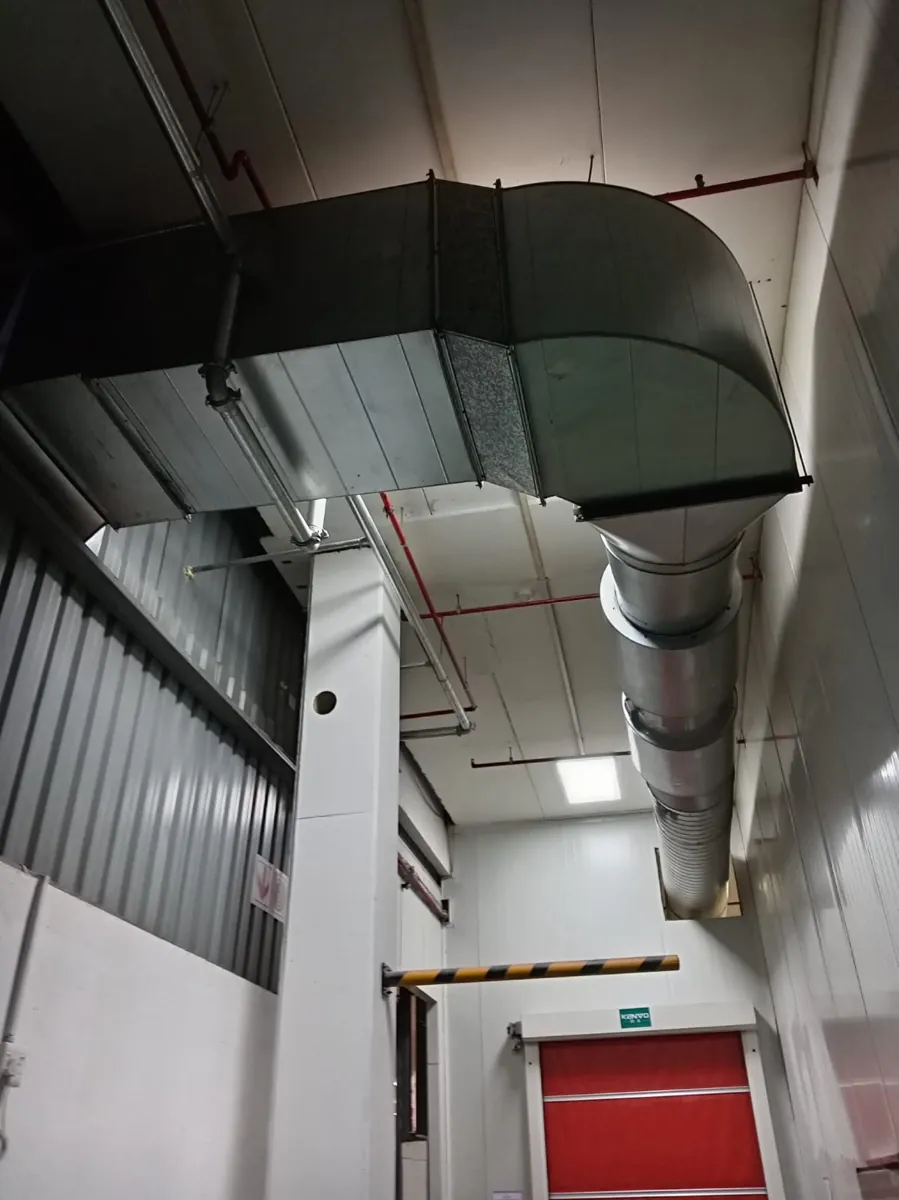
Manufacturing, installation or service approach
Work can include fan mounting, duct transitions, supports, weather-related connections and integration with existing extraction ducting. Where a unit is being replaced, the roof opening and the original fan duty should be verified rather than assuming any similarly sized replacement is suitable. Electrical interfaces and any roof sealing responsibility must be assigned clearly.
Technical safeguards and limitations
Roof work demands safe access and competent assessment of loading and weatherproofing. The installation must not compromise roof integrity or create unsafe discharge. Fans serving hazardous or high-temperature processes require equipment selected for the duty rather than a standard weatherproof fan.
What to provide for a quotation
Provide photographs of the roof and existing fan location, roof height, internal duct route, extracted material and any drawings or landlord conditions. Tell us whether the roof is accessible during operations and if lifting equipment will be required.
Discuss the scope with our technical team
Roof arrangement and water-tight installation
A rooftop exhaust fan must be matched to the connected duct and roof structure. We review curb dimensions, upstand condition, access to the fan, weather exposure and the location of the exhaust discharge relative to fresh-air intakes. Flashing and waterproofing responsibilities need to be agreed with the relevant roofing contractor rather than assumed to fall inside a fan supply price.
Servicing access after installation
A fan positioned above an operating kitchen or factory may require planned access arrangements for belt inspection, grease removal or motor replacement. We discuss isolators, safe access, lifting routes and scheduled operating restrictions before installation. A maintainable roof layout reduces the need to dismantle surrounding ductwork during future repairs.
Request a project quotation
Equipment and operating considerations
Installing a roof exhaust fan requires attention to the roof opening, curb or mounting frame, weather sealing and maintenance access. Fan discharge must be considered against nearby air intakes and occupied areas. A powerful fan without sufficient makeup air may underperform or create pressure problems in the building. We discuss the air stream, expected duty, roof structure and isolation method before equipment is chosen. Grease-bearing or hazardous exhausts need application-specific safety assessment.